Trailer Brake Controller Compatibility: Check the Truck and Actuator Together
Identify the truck, controller and trailer actuator before buying; check supported brake types, configuration and installation records.
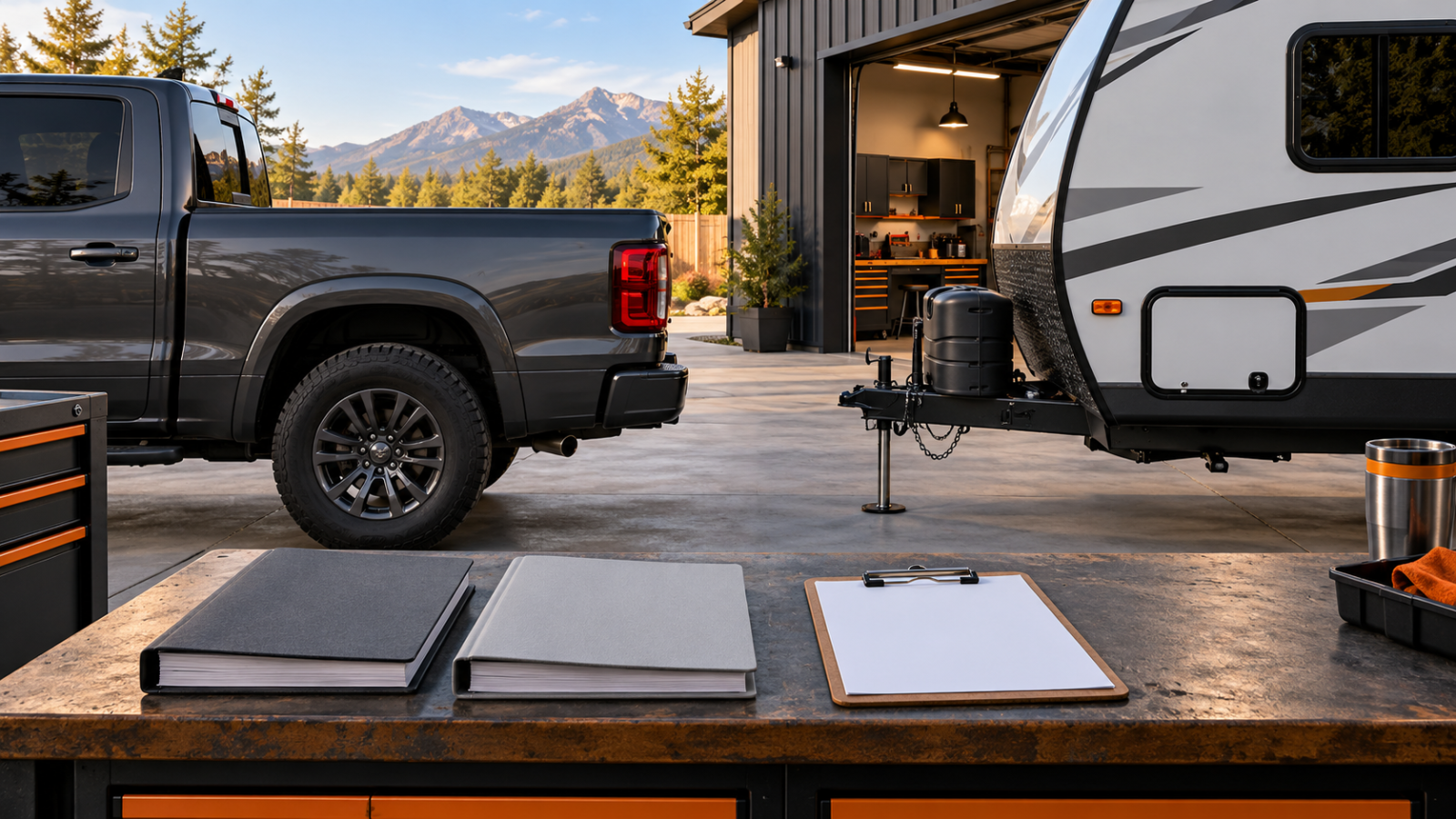
A seven-pin socket does not finish a trailer-brake compatibility check. Before buying a controller, borrowing a trailer or collecting a new one, identify the truck’s installed controller and the trailer’s brake system. Then confirm that the two manufacturers support that combination.
This is researched compatibility analysis, not a road test or an installation guide. It deliberately does not prescribe a universal gain setting, wiring modification or brake test. The correct setup depends on the actual truck, controller, trailer and brake actuator.
Separate three questions that often get bundled together
First, can the truck carry and tow the proposed load within all applicable ratings? Second, are the electrical connections and brake-control equipment compatible? Third, are the brakes properly installed, maintained and configured? A positive answer to one does not establish the other two.
Start the weight question with our guide to towing capacity, payload and combined ratings. Keep the brake-equipment check alongside that calculation, not inside a single “tow package” checkbox. A salesperson’s description of a package is a starting point for locating equipment records, not a substitute for identifying installed hardware.
Make a short comparison sheet with the truck model year and VIN, controller brand and model, trailer identity, brake type and actuator model where applicable. Use labels and documentation that can be obtained safely. Ask the dealer or service technician to identify components that are inaccessible or unclear.
Identify how the trailer brakes are actuated
Do not infer the system solely from the trailer’s size or whether it has disc brakes. Ask the trailer manufacturer for the fitted brake and actuator specifications, especially if the trailer has been modified.
Ford’s integrated-controller guidance for the vehicle covered by that manual distinguishes electric drum brakes, some compatible electric-over-hydraulic systems and hydraulic surge brakes, which that controller does not activate. That distinction is useful; the compatibility statement itself must not be extended to every Ford or every trailer.
If a used trailer has a replacement actuator, record the replacement rather than relying on the original brochure. Ask for the installation documentation and any required compatibility equipment. “It worked with the previous owner’s truck” leaves the current combination unverified.
Read the controller’s exact compatibility statement
Match the full model number, generation and vehicle electrical system to the manufacturer’s instructions. Similar-looking controls can belong to different products. An online listing that merely says “electric brakes” may not answer the electric-over-hydraulic question.
REDARC’s compatibility guidance illustrates this specificity. It discusses Tow-Pro Elite V2 and V3 support for most electric and electric/hydraulic systems, distinguishes other controller types, and identifies proprietary-system exceptions. It also describes extra considerations for 24-volt vehicles. Those qualifications are reasons to verify a combination, not reasons to label every controller from the brand interchangeable.
When asking for support, send both product identities in the same request. A useful question is: “Is this controller, in this truck configuration, approved to operate this exact actuator, and what installation or configuration requirements apply?” Save the written response with the manuals.
Check configuration without guessing a setting
Compatibility may still require the correct mode and setup. In a separate Ford controller-mode manual section, the manufacturer distinguishes electromagnetic drum and electric-over-hydraulic selections and notes that gain is saved to the active trailer profile. That is a specific interface example, not a menu sequence for another model.
Ask the installer to explain the settings that apply to your combination and the manufacturer’s procedure for checking them. Do not copy a gain number from an internet post. Record the selected trailer profile so that switching between trailers does not quietly substitute another setup.
A connected message is also not a complete inspection of brake performance. Ask how the technician verified the installation, what checks remain the owner’s responsibility and what messages require service. Unresolved wiring faults or uncertain brake operation should be addressed before towing, not explained away by a working lighting circuit.
Leave with a complete handover
Request the installed controller and actuator details, relevant compatibility confirmation, installation invoice, manuals and explanation of the completed checks. Keep any exclusions visible. If the shop cannot verify a component, the record should say so rather than leaving an empty box that could later be mistaken for approval.
Before changing trailers, repeat the identity and compatibility check. Before modifying the truck or trailer wiring, obtain the correct manufacturer instructions and qualified help. Brake equipment is not the place to improvise a workaround for an unexplained mismatch.
The useful buying decision comes at the end of this process: a supported combination, correctly installed and configured, with its limitations understood. A controller’s screen, price or brand reputation cannot establish those facts on its own.