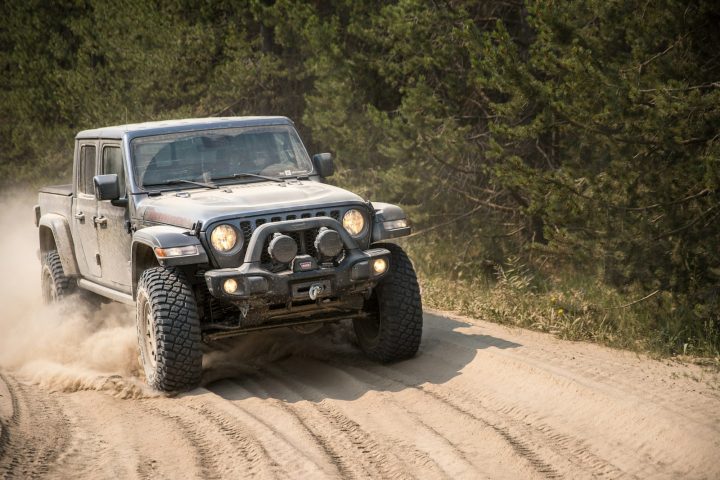
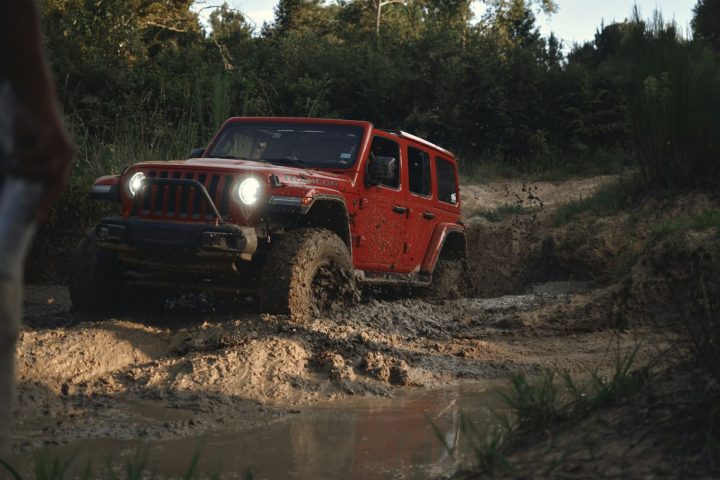
4-High vs 4-Low: When to Use Each and How to Shift Correctly
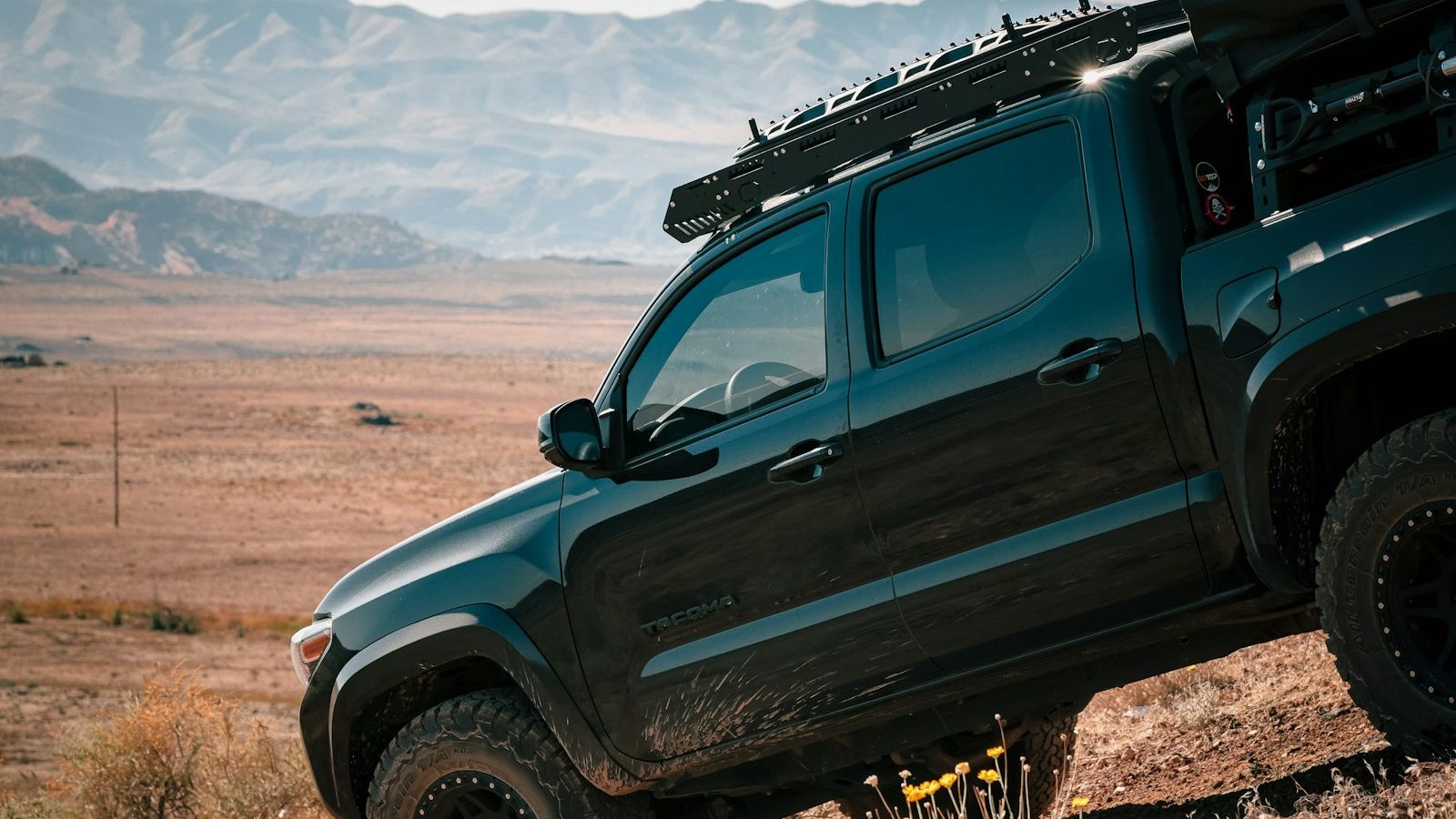
4-High is for traction at road-ish speeds. 4-Low is gear reduction for slow, steep, heavy work. Here's what each range really does, how fast you can go, and how to shift without grinding anything.
The short version
- Low range typically multiplies torque by roughly 2.5:1 to 4:1 and cuts wheel speed by the same factor at a given rpm.
- Crawl ratio is first gear x low range x axle ratio. Higher numbers mean slower, more controlled crawling.
- Use 4H for snow, gravel, wet grass and faster sand or mud. Use 4L for steep grades, rocks, ramps and slow deep terrain.
- Many trucks require a full stop in neutral to shift in or out of 4L. Wait for the indicator to stop blinking.
- Part-time 4H and 4L both bind on dry pavement. Nissan puts the Frontier's 4LO ceiling at about 31 mph.
On a typical part-time 4x4, 4-High and 4-Low both lock the front and rear axles together, but they do very different jobs. 4-High adds traction at normal driving speeds. 4-Low is a gear reduction that trades speed for torque and control, and using the wrong one is how people overheat transmissions, dig holes and break axle shafts.
What low range actually does
A two-speed transfer case has two ratios. 4-High (4H) passes power straight through at 1:1, the same as 2H, only now it goes to both axles. 4-Low (4L) routes power through a reduction gearset, usually a planetary set, so the output shaft turns slower than the input. Most pickup low ranges fall somewhere around 2.5:1 to 4:1. Jeep's numbers show the spread: the Gladiator's Command-Trac case has used a 2.72:1 low range, and the Rubicon's Rock-Trac case uses 4:1.
That reduction multiplies everything downstream. With a 2.72:1 low range, the wheels turn at about 37 percent of the speed they would in 4H at the same engine rpm and gear, and the torque reaching the axles is multiplied by roughly 2.72 before driveline losses. With a 4:1 low range, wheel speed drops to a quarter. Low range multiplies engine braking by the same factor, which matters as much going downhill as it does going up.
Where the power goes in each mode
2H: rear-wheel drive
The transfer case sends everything to the rear driveshaft. The front axle freewheels because the hubs or axle-disconnect are unlocked.
- Use it for
- Dry pavement, highway, daily driving
- Why
- Least driveline wear, best fuel economy
4H: front and rear locked together
On a part-time system both driveshafts turn at exactly the same speed. There is no center differential, so the front and rear cannot slip against each other in a turn.
- Use it for
- Snow, gravel, wet grass, faster sand and mud
- Avoid
- Dry pavement — the driveline binds in tight turns
4L: same lock, plus gear reduction
Power passes through a reduction gearset in the transfer case, typically 2.5:1 to 4:1. Wheel speed drops and torque and engine braking are multiplied by the same factor.
- Use it for
- Steep climbs and descents, rocks, boat ramps, slow deep terrain
- Speed
- Keep it slow; many manuals cap 4L around 25–30 mph
AWD / Auto 4WD: front and rear can differ
A center differential or computer-controlled clutch pack lets the axles turn at different speeds, so it is safe on any surface. Auto modes add front torque when the rear starts to slip.
- Use it for
- Changing conditions, wet or icy roads, towing on slick highways
- Note
- Crossover-style AWD has no low range
Crawl ratio, worked out
Crawl ratio is the total gear reduction between the engine and the tires in the truck's lowest gear. The formula is simple: first gear ratio times low range ratio times axle ratio. It's the most useful single number for comparing how slowly and smoothly two trucks can crawl.
Worked example
First gear 4.71:1 x low range 2.72:1 x axle ratio 3.73:1 = 47.8:1 crawl ratio. At 1,000 engine rpm, the axle shafts turn about 21 rpm. On a 33-inch tire, which covers roughly 104 inches per revolution, that's about 2 mph. Swap in a 4:1 low range and 4.10 axle gears and the crawl ratio jumps to 77.2:1, so the same 1,000 rpm moves the truck about 1.3 mph.
A bigger number buys control. A higher crawl ratio lets the engine run at an rpm where it makes usable torque while the truck moves at a walking pace. You're not slipping the torque converter or riding the brakes to hold speed, so the transmission stays cooler and the tires turn smoothly instead of lurching over ledges. It also multiplies torque: ignoring losses and converter multiplication, 300 lb-ft at the crank becomes more than 14,000 lb-ft split across the driven axles at 47.8:1. That's why a stuck tire in 4L can break parts that would survive in 4H.
Tire size matters too. Bigger tires make every gear effectively taller, which lowers your real-world crawl ratio. If you've gone up two or three sizes, read regearing after bigger tires, then plug your own numbers into the calculator below.
When to use 4-High
4H is for low traction at speeds where you still need momentum. On a part-time system, it's also only for surfaces loose or slick enough to let the tires slip a little in turns.
- Snow- and ice-covered roads. 4H helps you get moving and keep moving. It does nothing for braking, so leave more room than you think.
- Gravel and washboard dirt roads. Better stability and less rear-end wander on loose corners.
- Wet grass and muddy fields. Pulling a trailer out of a wet campground or event parking lot is a classic 4H job, as long as you don't need to crawl.
- Faster sand and mud. Beach runs, dunes and shallow mud reward steady momentum and wheel speed, which 4H provides. Low range at those speeds just runs you into the rev limiter.
Speed still matters in 4H. Nissan's 2026 Frontier manual says speeds over 62 mph (100 km/h) in 4H aren't recommended, and other manufacturers publish their own limits. If your truck has an automatic mode such as Ford's 4A or GM's Auto 4WD, that's the better choice for roads that alternate between dry and slick, because it won't bind. The 4WD vs AWD guide explains how those systems differ.
When to use 4-Low
4L is for situations where you need control and torque at walking speed.
- Steep climbs. Low range lets you climb slowly at a steady rpm instead of charging the hill. If you have to bail out, you're going slowly enough to back down under control.
- Steep descents. Engine braking in 4L and first gear keeps the truck walking downhill without cooking the brakes.
- Rock crawling and ledges. Fine throttle control, one tire at a time.
- Boat ramps. Pulling a heavy boat up a wet, algae-slick ramp in 4L keeps the torque converter from slipping for a long time under load, which is how transmissions overheat. The truck creeps up smoothly instead of spinning and hopping.
- Pulling another vehicle. A low-speed, controlled pull with a proper recovery strap and rated recovery points is far safer in 4L than a running yank in 4H. Never use a tow ball as a recovery point. Our recovery gear guide covers the hardware you need.
- Deep, soft terrain at low speed. Deep snow, sticky mud and soft sand that you're crossing slowly, especially with a load. If you need speed to stay on top of it, go back to 4H.
| Situation | Range | Why |
|---|---|---|
| Snowy or icy road | 4H | Traction at road speed; no torque multiplication needed |
| Gravel or washboard road | 4H | Stability on loose corners |
| Wet grass or muddy parking area | 4H | Momentum without spinning the tires wildly |
| Dunes, beach, shallow mud at speed | 4H | Wheel speed and momentum keep you on top |
| Steep climb or descent | 4L | Slow, steady climbing and strong engine braking |
| Rocks, ledges, stair-steps | 4L | Precise throttle control at walking pace |
| Boat ramp with a heavy trailer | 4L | Less converter slip and transmission heat |
| Recovering another vehicle | 4L | Controlled, low-speed pull |
| Dry pavement | 2H (or auto mode) | Part-time 4WD binds without tire slip |
Speed limits in 4-Low
Not very fast, and that's by design. Nissan's 2026 Frontier owner's manual says the maximum speed in 4LO is approximately 31 mph (50 km/h) and warns against raising vehicle speed excessively. Other manufacturers publish their own numbers, and some only say to avoid high speed. Look it up for your truck and treat it as a ceiling, not a target.
The reason is simple arithmetic. With a 2.72:1 low range, 25 mph in 4L spins the engine and transmission as fast as roughly 68 mph would in the same gear in 4H. The low-range gearset, the front differential and every joint in between are working hard at that point. If a trail opens up enough to cruise, stop and shift to 4H.
How to shift into and out of 4-Low
Procedures vary more than people expect. Some trucks want a dead stop in neutral. Some accept the shift while rolling at a crawl. Many electronic systems won't complete the shift until every condition is met and will blink an indicator at you until they do. The procedure in Nissan's 2026 Frontier manual is typical of the strict camp:
- Stop the truck. Come to a complete stop with your foot on the brake. Straighten the wheels if you can.
- Shift the transmission to neutral. Keep the brake pressed. Neutral releases the automatic transmission's parking lock, so the truck can roll.
- Select 4L. On the Frontier you push and turn the 4WD dial. The engine must be running for the shift to happen.
- Wait for a solid indicator. A blinking 4L light means the shift isn't finished. Nissan warns that putting the transmission in gear too early can make the transfer case grind, fail to engage or stay in neutral.
- Shift into gear and drive. Pick the lowest gear the situation calls for and use light, steady throttle.
Getting out of 4L is the same routine in reverse: stop, brake, neutral, select 4H or 2H, and wait for the indicator. If the case refuses to shift, the driveline is usually loaded up. Roll a foot or two with the wheels straight to relieve the tension, then try again. Nissan also notes that in very cold weather the case may not shift between 4H and 4LO until the truck has been driven for a while.
Shift-on-the-fly for 4-High
Switching between 2H and 4H is easier. Shift-on-the-fly systems allow it while moving, up to a speed set by the manufacturer. Nissan says no trip to neutral is needed on the Frontier, but the shift should be made while driving straight, never while turning, reversing, descending a steep grade or with the rear wheels spinning. That last one deserves emphasis: engage 4H before you need it, not after the rear tires have already started digging.
Neutral means rolling
With the transmission in neutral during a low-range shift, the parking pawl isn't holding anything. On a slope, keep your foot firmly on the brake the whole time, and never leave the transfer case itself in its N position unless your manual's flat-towing procedure calls for it.
Why part-time 4WD stays off dry pavement
A part-time transfer case locks the front and rear driveshafts together in both 4H and 4L. In a turn, the front tires travel farther than the rear tires, and on dry pavement they can't slip enough to make up the difference. The driveline winds up, the steering gets heavy, tires scrub, and the truck may crow-hop as a tire finally breaks loose. Low range makes it worse, because the extra torque multiplication lets the driveline build even more stress before something gives.
Nissan's Frontier manual even tells owners what to do if a 4WD warning message comes on while driving in 4H or 4LO on dry, hard roads: shift back to 2WD. The exception is a full-time system with its center differential unlocked, or an automatic mode like 4A or Auto 4WD. Those are designed for mixed surfaces. The locked 4H and 4L positions on those same trucks follow part-time rules.
Engine braking, hill descent control and crawl modes
Low range is as useful going down as going up. In 4L and first gear, the engine holds the truck back with 2.5 to 4 times more leverage than it has in 4H, so the brakes only have to trim speed instead of doing all the work. Nissan's manual recommends using engine braking and the lowest transmission gears on steep downhill grades.
Hill descent control adds the ABS system to the mix. It pulses the brakes to hold a slow, set speed so you can concentrate on steering. Nissan says the Frontier's system helps hold speed on steeper downgrades when you're traveling under roughly 15 to 21 mph, that it's meant for situations where engine braking alone in 4H or 4L can't control speed, and that you should never rely on it alone. Toyota offers Downhill Assist Control on off-road Tundra models, plus CRAWL Control, which it describes as a low-speed off-road cruise control. Ford lists Hill Descent Control and Trail Control on Super Duty off-road packages, and Chevrolet pairs the Silverado ZR2's two-speed transfer case with a Terrain mode.
Shop tip
Pick your line and your range at the top of the hill, not halfway down. Stopping on a steep, loose descent to shift ranges means sitting in neutral on a slope, which is exactly where you don't want to be.
Common 4-High and 4-Low mistakes
- Leaving part-time 4H on after the road dries. It's an easy mistake the morning after a storm. The first sign is heavy steering in a parking lot, and the bill comes later.
- Using 4H for slow, technical terrain. Crawling rocks or pulling a trailer up a ramp in high range keeps the torque converter slipping and the transmission temperature climbing. Use 4L.
- Driving too fast in 4L, or forgetting you're in it. Screaming along a forest road in low range overheats fluids and overstresses the front driveline.
- Shifting into gear while the 4L light is still blinking. That's how transfer cases grind or pop into neutral.
- Waiting until you're stuck. Engage 4WD before the mud hole or snowbank, while all four tires still have some grip.
- Spinning the tires hard in 4L. Low range multiplies torque. A tire that spins up and suddenly bites can snap a CV joint or axle shaft, especially with a locker engaged. Our locking differentials guide explains why.
- Forgetting the hubs. On a truck with manual locking hubs, the transfer case can say 4WD all day while the front wheels do nothing.
- Assuming 4WD helps you stop. It doesn't. Braking grip comes from your tires, not your transfer case.
Get the range right and a stock truck will go a lot farther than most people expect. For line choice, momentum and tire pressure on each kind of terrain, continue with off-road driving basics.
Frequently asked questions
Can you drive on the highway in 4-High?
On snow- or ice-covered highway, yes, at a sensible speed. On dry pavement, not with a part-time system, because the locked front and rear driveshafts bind in turns and wear parts quickly. Manufacturers set their own speed limits for 4H. Nissan's 2026 Frontier manual, for example, says speeds over 62 mph in 4H are not recommended. Trucks with an automatic 4WD mode can use that mode on mixed or dry roads.
How fast can you drive in 4-Low?
Check your owner's manual, because limits vary. Nissan's 2026 Frontier manual gives a maximum of about 31 mph in 4LO, and other manufacturers set their own limits. Low range multiplies engine and driveline speed, so 25 mph in 4L works the drivetrain about as hard as roughly 68 mph would in the same gear in 4H with a 2.72:1 low range. If the trail opens up, stop and shift to 4H.
Do you have to stop to shift into 4-Low?
On many trucks, yes. Nissan's Frontier procedure is to stop, hold the brake, put the transmission in neutral, select 4LO and wait until the indicator stops blinking before shifting into gear. Some other systems allow the shift while rolling at a crawl in neutral. Shifting between 2H and 4H is usually allowed on the move. Your owner's manual has the exact procedure for your transfer case.
Is 4-High or 4-Low better for snow?
Use 4-High for driving on snowy or icy roads at normal speeds. Use 4-Low only for slow, difficult spots such as deep unplowed snow, a steep snowy driveway or pulling a trailer out of a snowbound lot. Low range gives more torque and control at walking pace, but it's the wrong tool for road speeds. Good winter tires matter more than either range for grip and stopping.
Should I use 4-Low when towing a boat up a ramp?
Usually, yes. Pulling a heavy boat and trailer up a wet, slick ramp in 4L lets the truck creep up smoothly while the torque converter slips less, which keeps transmission temperatures down. Engage 4L on a level spot before you back down the ramp, use light throttle on the way up, and shift back to 2H once you're on dry pavement in the parking lot.
Sources & further reading 7
- nissanusa.comnissanusa.com/content/dam/Nissan/us/manuals-and-guides/frontier/2026/2026-nissan-frontier-owner-manual.pdf
- jeep.comjeep.com/gladiator/capability.html
- media.stellantisnorthamerica.commedia.stellantisnorthamerica.com/newsrelease.do?id=25289
- pressroom.toyota.compressroom.toyota.com/2026-toyota-tundra-a-bold-new-chapter-in-full-size-pickup-excellence/
- pressroom.toyota.compressroom.toyota.com/the-2026-toyota-tacoma-adventure-awaits/
- ford.comford.com/trucks/super-duty/2026/
- chevrolet.comchevrolet.com/trucks/zr2-family
Specs and ratings change between model years and configurations. Confirm numbers for your exact truck in the owner's manual and on the door-jamb labels.