Bedliner and Tonneau Cover Drainage: Questions to Settle Before Installation
Coordinate a truck bedliner and tonneau cover before installation: identify the products, confirm drainage routing, and keep a useful handover record.
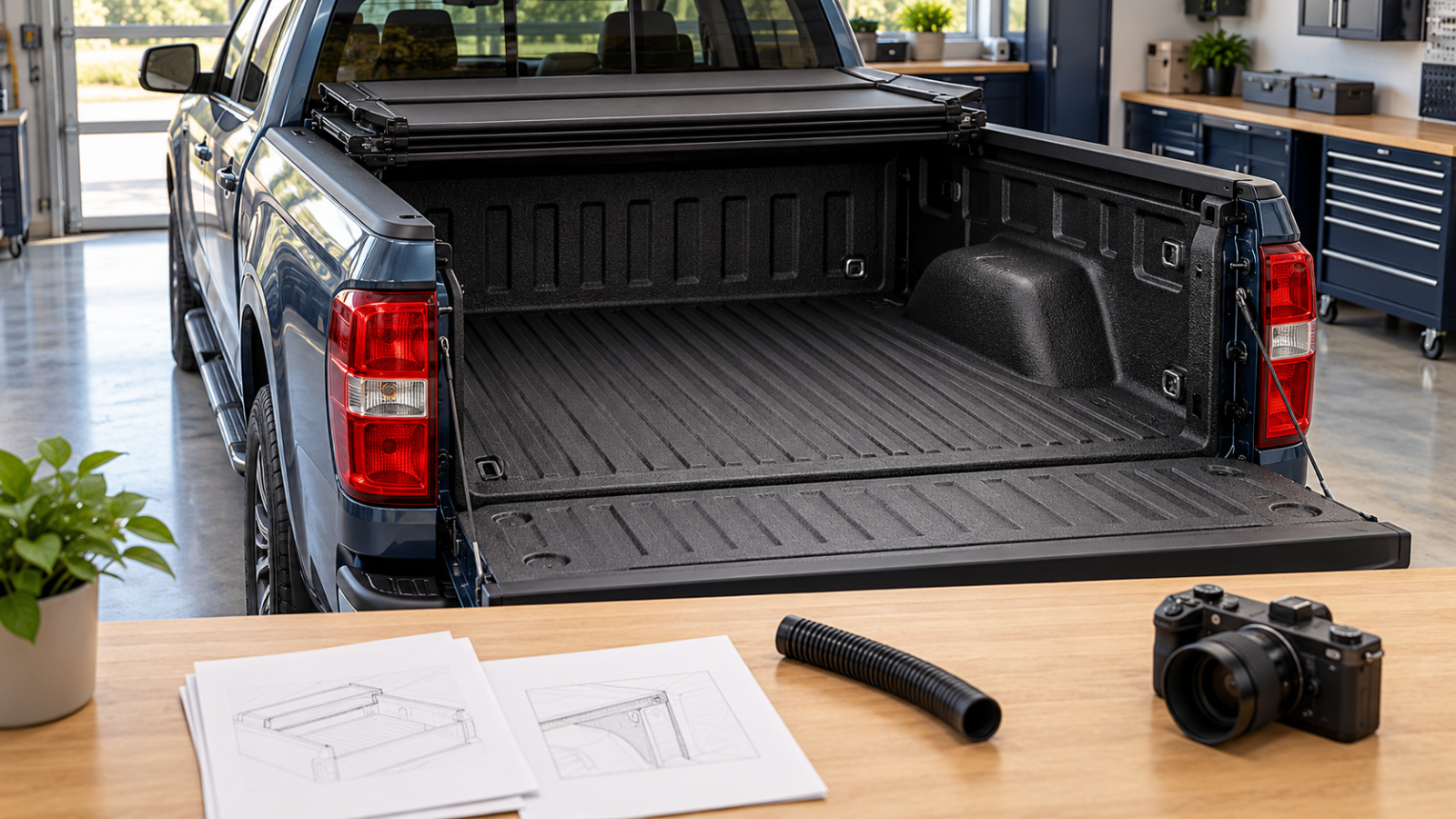
A new bedliner and a tonneau cover share the same small working space. The coating protects the bed surface; the cover may use rails, seals and drain tubes to manage water. Before either installer changes that space, agree on how the two products will fit together.
This is a planning and handover checklist, not drilling instructions. A visible plug or recess is not permission to make a hole. Use the instructions for the exact truck, bedliner and cover, and leave uncertain routing or coating alterations to the appropriate installer.
Identify all three products first
Write down the truck’s model year, bed length and relevant bed equipment. Add the cover’s maker, model and part number, plus the lining type. A removable molded liner and a bonded spray-applied coating require different treatment. A mat lying on the bed floor is another separate item.
Ask for the current installation document that matches the cover’s part number. A video of a similar truck can be useful background, but it does not establish which openings, clamps or seals apply to yours. If a used cover has no identifiable model, resolve that before booking coating work around it.
Separate a liner opening from a vehicle opening
The distinction is visible in one manufacturer example. Ford’s published REV hard-folding cover instructions include a separate section for a drop-in liner. That section describes access through the removed liner and routing through a designated opening in the bed; the main instructions describe a hose connection at the cover rail. These are different parts of the route, not a general instruction to drill through an assembled truck.
The example is REV HFC instruction sheet 318B0055, revision April 30, 2021. Its dimensions and steps belong to the specified application. Do not transfer them to another cover, truck or spray-in liner. Ask the installer to identify the applicable instructions and the approved outlet on your vehicle.
Have the installers agree on the sequence
Before the lining appointment, tell the applicator whether a cover is already installed or will be fitted later. Before the cover appointment, tell that installer what coating is present and when it was applied. Ask the coating provider when it can accept handling, washing, clamp contact and normal service; those permissions may differ.
Use a short written scope with these questions:
- Which cover components need removal, and who will reinstall them?
- Which surfaces must remain available for clamps, seals and access?
- Does the cover use drain tubes, and where does its manual direct them?
- Will any work disturb the coating, and who approves and restores that area?
- Who checks the completed installation before the truck returns to use?
Do not ask an installer to coat over unknown hardware or to make an opening simply because another truck has one there. Resolve conflicting instructions with the product suppliers before work begins.
Record what is accessible at handover
With the installer present, photograph the finished bed and each accessible cover-drain connection. Keep an overview that shows where the close-up belongs. Note any area that cannot be seen without removing parts rather than assuming it was checked.
Ask the installer to demonstrate the cover’s permitted opening, closing and securing positions using its manual. Confirm that the handover includes the coating-care instructions and any cover maintenance requirements. A tidy-looking bed is not proof that hidden routing or fasteners are correct.
If the supplier specifies a drainage check, have it performed by that supplier’s method. Do not improvise a pressure-washer test or direct water into electrical equipment. Keep water-sensitive cargo protected until the installation’s limitations are understood; a cover should not be treated as a guarantee that everything beneath it will stay dry.
When water appears later
Before changing anything, note when and where it appeared: after rain, washing, travel or opening the cover. Photograph the wet area and the accessible hose route. Record whether work or cargo loading occurred since the last dry inspection. This gives the installer a useful starting point without prematurely blaming the coating.
Avoid poking through a coated recess, cutting a hose or adding sealant as a first response. Those changes can erase useful evidence and create a different repair problem. Return the observations to the cover installer and involve the coating applicator if the proposed correction affects the finish.
Keep one combined installation record
Save the cover instructions, coating invoice, installer contacts and handover photographs together. Warranty documents matter too: LINE-X’s published policies, for example, require proof of purchase and distinguish bedliner coverage from cover coverage. Other brands and installations have their own terms.
The useful outcome is a traceable installation: the correct products, an agreed route and sequence, clear care instructions, and someone responsible for resolving questions. For broader coating context, see our bedliner overview.