Rock Sliders, Skid Plates and Bumpers: A 4×4 Truck Armor Guide
Sliders, skids, diff guards, winch bumpers and protective coatings: what each one protects, how the materials compare, and how to fit armor into your payload.
The short version
- Frame-mounted sliders carry impacts into the frame; step bars and running boards fold into the rocker on a rock.
- 3/16-in steel plate weighs 7.66 lb per sq ft, 1/4-in aluminum 3.51 lb and 1/2-in UHMW about 2.4 lb.
- A heavy steel front bumper can add about 200 lb up front before a 72–92 lb winch; check front GAWR.
- Buy bumpers designed for your truck's sensors and radar, and ask whether they were engineered for airbag timing.
- Every pound of armor comes out of the payload on your door placard, so weigh the loaded truck on a scale.
Armor is insurance you bolt on: it keeps a rock from splitting your oil pan, a ledge from caving in a rocker panel and a deer from ending your trip. Every pound of it also rides on your springs and comes out of your payload, so buy it in the right order and only as much as your driving calls for.
What truck armor protects, and what it costs you
Think of armor in zones. The sides of the cab, where rocker panels and doors meet rocks and stumps. The belly, where the oil pan, transmission, transfer case, fuel tank and exhaust hang low. The ends, where bumpers take approach-angle hits, brush and wildlife. On trucks that crawl rocks, the axles and control arms make a fourth zone.
The cost is weight, and most armor is steel. Heavy armor eats payload, sags the front suspension, lengthens stopping distances and burns fuel. Skids and sliders also hang a little lower than the parts they cover, trading a sliver of clearance for the ability to slide instead of snag. Here's how the raw materials and the biggest single add-on compare.
Rock sliders: frame-mounted, body-mounted and step bars that aren't sliders
Rock sliders protect the rocker panels, the structural sills under the doors. A crushed rocker can bind the doors and is hard to repair properly. Good sliders also let you pivot off a rock or slide over a ledge that would otherwise catch the body.
Frame-mounted sliders
This is the strong choice. Outriggers bolt or weld to the frame and carry the rail out under the rocker, so impacts go into the frame instead of the body. Many are built from DOM steel tube around 1.75 to 2 inches in diameter with a wall near 0.120 inch; 2-inch tube of that wall weighs roughly 2.4 lb per foot before outriggers and plates, so check each set's listed weight.
Look for a rear kick-out angled outward ahead of the rear tire, which keeps the bed or quarter panel from pivoting into a rock, and a tucked profile that preserves clearance. Bolt-on kits are reversible. Weld-on sliders are stronger and permanent, and truck makers restrict welding and drilling on some frames, so check the body builder or upfitter guidance first.
Body-mounted sliders
These bolt to the pinch seam or the rocker itself. They're lighter and fine against scrapes, but a hard hit pushes the load straight into the sheet metal they're meant to protect. They suit brush and light trails more than rock crawling.
Step bars, nerf bars and running boards
These are built to be stood on, not landed on. Most are thin tube or aluminum boards on light brackets, and on a rock they fold up into the rocker, sometimes doing more damage than bare sheet metal would. They also cost clearance. A step bar is not a slider, whatever the listing calls it.
Sliders are not jack stands
Use a slider as a lifting point only if its maker says it's designed for that, and follow your owner's manual for jacking. Never get under a truck held up by a jack alone. A high-lift jack on a slider can slip or tip, and its handle can kick back hard.
Skid plates: what the factory covers and what it doesn't
Factory protection varies more than most buyers realize. Base trims often have little more than plastic splash shields that keep water and road grime out of the engine bay; they won't survive a rock. Off-road packages usually add stamped steel or aluminum skids, most often under the front of the engine and the transfer case, and sometimes the fuel tank. Crawl under your truck and see what's actually there, because "skid plates" on a window sticker can mean one plate.
The usual gaps are the transmission pan, the transfer case on non-off-road trims, the fuel tank, exhaust pipes and catalytic converters, the lower control arms, and parts tucked along the frame such as the EVAP canister. Prioritize whatever hangs lowest and would strand you if punctured. A holed oil or transmission pan ends the trip; a dented exhaust usually doesn't.
Mounting matters as much as thickness. A plate is only as strong as the crossmember or bracket holding it. Look for plates that bolt to the frame or factory crossmembers with substantial hardware, bolt heads that sit recessed or flush, and leading edges that angle up so the plate rides onto an obstacle instead of hooking it.
Shop tip
Before you buy, check for access holes at the oil filter and drain plug. A skid you have to drop for every oil change will eventually get left in the garage. Drain holes matter too, so mud and water don't pack in against the pan.
Steel vs aluminum vs UHMW plastic
Skid plates, diff guards and some slider panels come in three main materials. Weights below are for flat plate before bends, brackets and hardware.
| Material | Common thickness | Weight per sq ft | On rock | Strengths | Weaknesses |
|---|---|---|---|---|---|
| Steel plate | 3/16–1/4 in | 7.66 lb (3/16 in), 10.21 lb (1/4 in) | Slides fairly well; drags more once bare | Strongest for its thickness; dents instead of tearing; weldable and easy to straighten | Heaviest option; rusts once the coating is scraped off |
| Aluminum (5052 or 6061) | 1/4–3/8 in | 3.51 lb (1/4 in), about 5.3 lb (3/8 in) | Tends to gouge and grab | About half the weight of 3/16-in steel at 1/4 in; won't rust | Softer, so it gouges and tears more easily; harder to repair; can corrode where it meets steel in salt |
| UHMW polyethylene | 1/2–1 in | About 2.4 lb (1/2 in) | Very slippery | Lightest; friction comparable to PTFE; very high impact strength for a plastic; won't rust | Needs thickness and good support; softens with heat; poor choice near exhaust |
Steel is the default for a reason: it's the most forgiving for its thickness, and a bent steel skid can often be hammered or pressed back. The penalty is weight, and a full belly set gets heavy fast.
Aluminum roughly halves the weight and won't rust, but a gouged surface tends to grab rock instead of sliding. It suits payload-conscious builds that see occasional hits. Use the isolating hardware the maker supplies where aluminum meets steel, especially in salt country.
UHMW polyethylene is the slippery one, with exceptional impact strength for a thermoplastic. It needs thickness and solid backing to resist point loads, and it begins to melt around 262°F, so keep it well away from exhaust and catalytic converters.
Differential guards and lower control arm skids
On a solid axle, the differential housing is the lowest point under the truck and usually the first thing to hit. There are two fixes. A heavy-duty differential cover, cast or thick steel, replaces the stamped factory cover. A guard bolts around the housing and shields the cover and the lower edge. A stamped cover pushed in by a rock can contact the ring gear, so either upgrade protects more than looks. Installing a new cover means draining, resealing and refilling the axle, so pair it with a scheduled gear oil change.
Independent front suspension trucks hang their lower control arms low, along with the CV axles and lower shock mounts. Lower control arm skids bolt or weld to the bottom of the arms so they slide instead of catching and bending. Make sure they don't block alignment cams, bump stops or grease fittings. Solid-axle trucks get a similar benefit from skids on the lower links or trailing arms.
Aftermarket bumpers: winch ratings, angles, weight and electronics
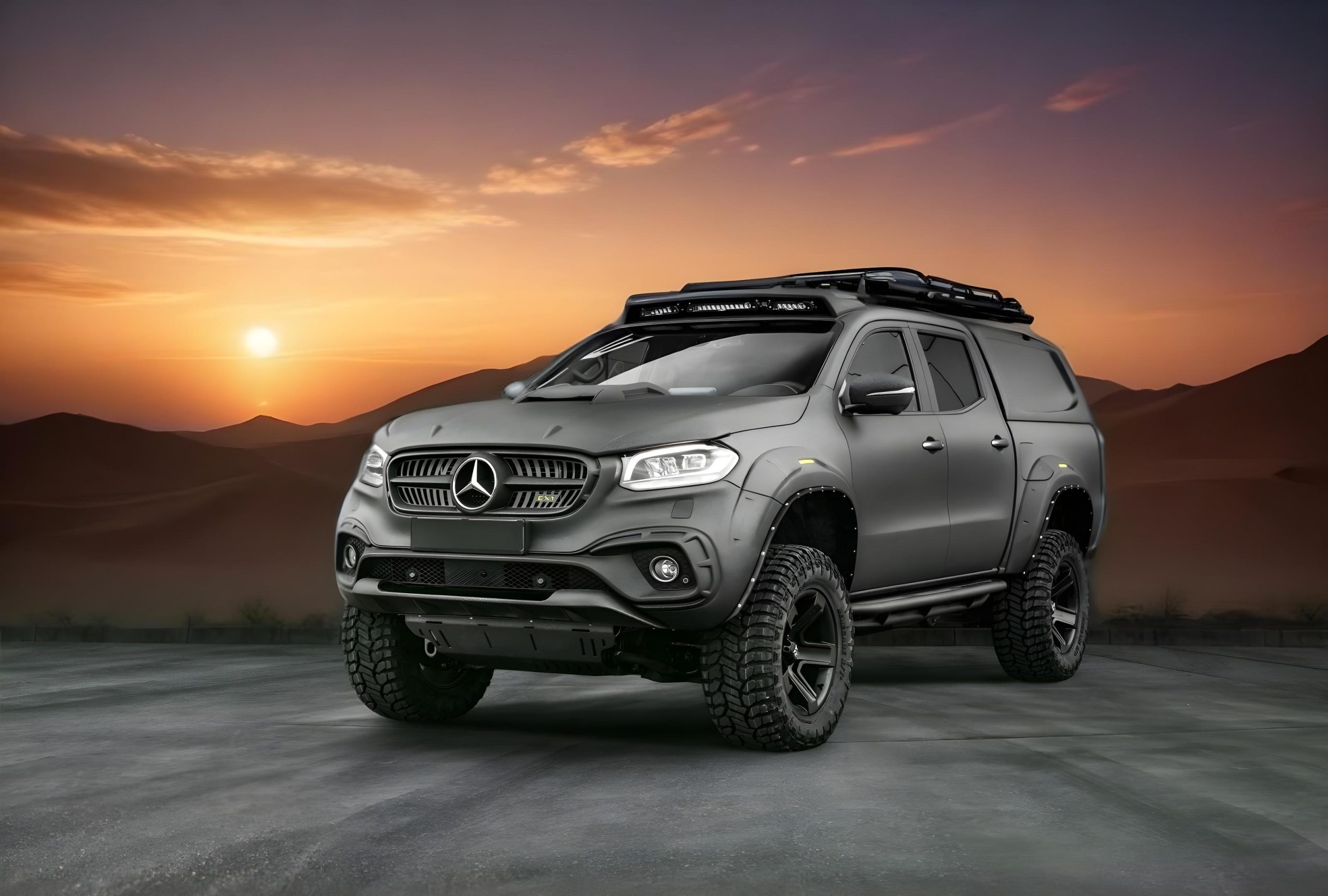
The front bumper on many modern pickups is a plastic fascia over a steel beam and crush structure, designed around crash performance and aerodynamics rather than rocks. An aftermarket bumper can add winch mounting, rated recovery points and better clearance, but it changes more of the truck than any other piece of armor.
Winch-rated means the whole mount
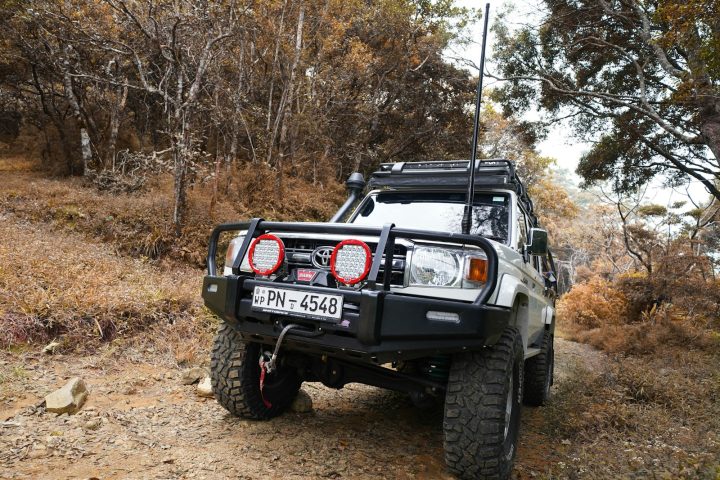
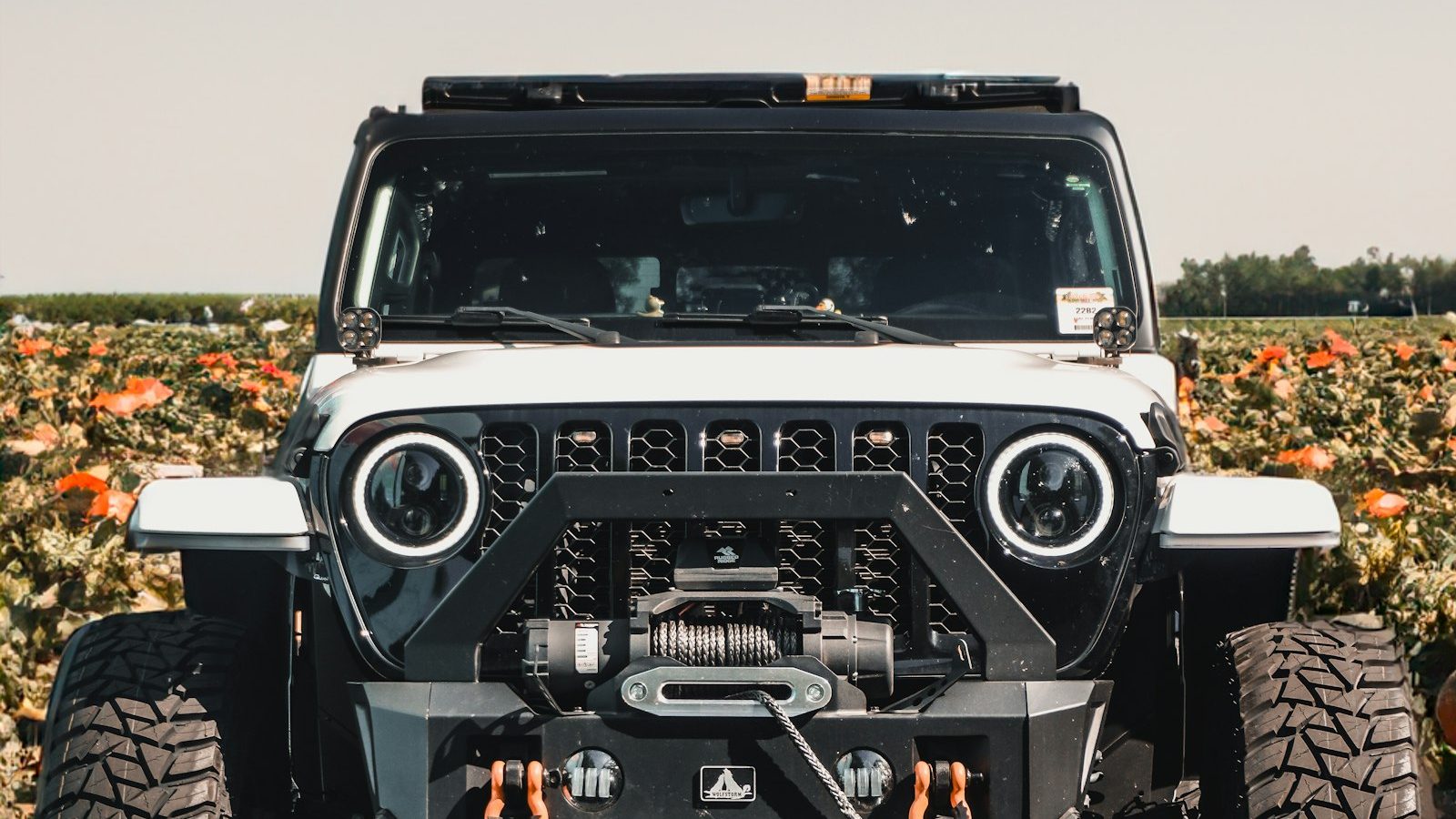
A winch-rated bumper has a mounting plate tied into the frame and built for a winch's full line pull. Check the maximum winch capacity the maker lists and match the winch to your truck's loaded weight. The winch itself is heavy: Warn's 10,000-lb VR EVO 10 is listed at about 72 lb with synthetic rope and about 92 lb with steel cable. Our recovery gear guide covers winch sizing and rigging. Use only rated recovery points or shackle mounts, never tie-down loops.
Approach angle gains
High-clearance bumpers tuck the corners up and back, which can noticeably improve approach angle over a low factory valance. A bumper built farther out to wrap a winch adds overhang and can cost you approach angle, so compare published figures or measure. Our explainer on approach, departure and breakover angles shows how.
Approach, breakover and departure angles
Three angles, three kinds of obstacles
Approach limits how steep a face you can drive up before the front bumper hits. Breakover limits how sharp a crest you can cross before the belly drags. Departure limits the drop or ramp you can leave before the rear bumper or hitch digs in.
Approach angle
Measured from the ground, tangent to the front tire, up to the lowest point of the front end. Bigger tires, a lift and a high-clearance bumper all raise it.
- Typical stock half-ton
- mid-20s°
- Serious off-road trims
- 30–45°
Breakover angle
The angle formed by lines tangent to the front and rear tires that meet at the lowest point between the axles. Long wheelbases lose here, which is why crew-cab long-beds high-center on crests.
- Quick estimate
- 2 × atan(2 × clearance ÷ wheelbase)
- Improves with
- Lift, taller tires, shorter wheelbase
Departure angle
Same idea as approach, at the back. Receiver hitches, low exhaust tips, mud flaps and long overhangs all cut it.
- Quick win
- Pull the hitch before the trail
- Watch for
- Rear bumper corners on ledges
Weight on the front suspension
One bumper retailer's comparison puts factory front bumpers with brackets at roughly 40 to 55 lb on half-tons and 60 to 70 lb on 3/4-tons, against about 250 lb for a heavy steel replacement. That's close to 200 lb ahead of the front axle before the winch, so expect some sag. Springs rated for the added weight restore height and ride under load better than a spacer does. Also check the front gross axle weight rating (GAWR) on the door jamb certification label, since everything mounted up front loads that axle.
Sensors, cameras and radar
Modern front ends carry parking sensors, cameras, fog lamps and, on many trucks, the radar for adaptive cruise and automatic emergency braking. Buy a bumper designed for your exact trim and sensor package, with mounts for each part. Radar needs a clear view forward, and metal or a winch in its path can block it. Some systems need re-aiming or recalibration after front-end changes, so check the service information and confirm the features work before relying on them.
Airbag sensors and crash structure
Know how your bumper behaves in a crash
A factory front end is engineered to crush at a controlled rate, and the airbag system decides when to deploy partly from how quickly the truck decelerates. A much stiffer bumper can change that. ARB, for example, says it replicates each vehicle's crush characteristics in its air bag compatible bars and validates them with crash barrier tests. Many bumpers make no such claim. Ask the maker whether the design was engineered or tested for your truck's airbag system before you buy, and check your state's bumper height and lighting rules.
Rear bumpers
Rear bumpers add departure angle, tire carriers and recovery points. If one includes a hitch receiver, find its tow and tongue weight ratings, which may be lower than the factory hitch, and tow within the lower number.
Pros
- Mounts a winch and rated recovery points
- Stands up to brush, rocks and animal strikes far better than a plastic fascia
- High-clearance designs can improve approach angle
- Solid mounting for lights
Cons
- Can add around 200 lb ahead of the front axle before the winch
- Front sag that may call for heavier springs
- Sensor, camera and radar fitment depends on the exact design
- Crash behavior may differ from stock unless the maker has engineered for it
Protective coatings for rockers, flares and bumpers
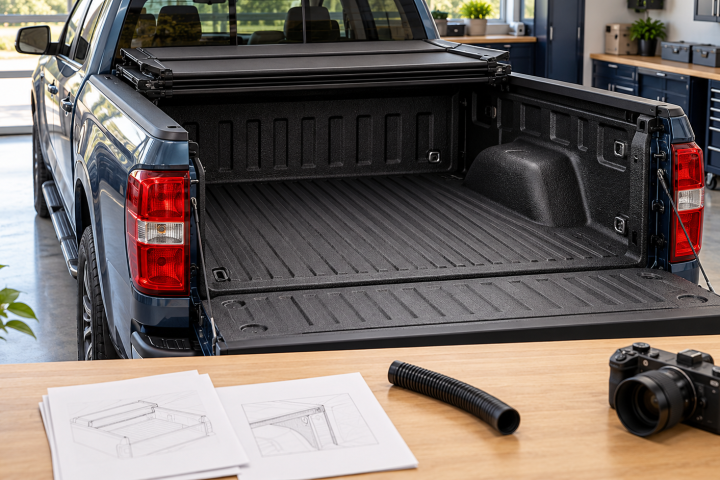
Armor gets scraped, and scraped steel rusts. Coatings are the cheap layer that keeps armor, and the body behind it, from corroding. Spray-on polyurea, the same family of material used in spray-in bedliners, is a common choice for rocker panels, fender flares, bumpers and sliders. It cures fast into a tough, textured, elastomeric skin known for impact and abrasion resistance, so it handles gravel and brush that would chip paint. On rockers and lower doors it acts as a sacrificial layer against trail rash and road salt, and scuffed areas can be recoated.
Results depend on prep. The surface has to be clean and properly abraded or blasted, rust removed or treated, and edges and seams fully covered, because coating applied over rust or contamination can trap moisture and let corrosion spread out of sight. Ask the applicator whether the product needs a UV topcoat to hold its color in the sun. For products, prep and DIY versus professional application, see our guide to bedliner paint for 4x4 owners.
Armor weight and your payload budget
Your payload limit is on the Tire and Loading Information placard, usually on the driver's door pillar. Federal rules require it to state that the combined weight of occupants and cargo should never exceed a set number of pounds. Every accessory bolted on after the factory comes out of that number, along with passengers, gear, fuel and trailer tongue weight. Our guide to GVWR, GCWR and payload explains how the ratings stack.
Example armor math for a full-size truck
Heavy steel front bumper, about 200 lb net over stock. A 10,000-lb winch with synthetic rope, about 72 lb. Twelve square feet of 3/16-in steel skid plate, about 92 lb before brackets. That's roughly 364 lb before sliders, a rear bumper, recovery gear or a single passenger. On a truck with a 1,400-lb placard, that leaves about 1,036 lb for everything else.
The best check is a scale. Weigh the truck loaded for a real trip at a certified public scale, front and rear axles separately, and compare against GVWR and each axle's GAWR. If you're building a travel rig, our overlanding build plan shows how to budget weight before you buy parts.
A priority order for buying armor
Buy for the terrain you actually drive. Rock trails push sliders to the top of the list, while forest roads and overland travel favor skids and a bumper. For most trucks, this order spends money where damage is most likely and most expensive.
- Rated recovery points. Not armor, but first. Frame-mounted, rated points front and rear make every recovery safer.
- Skid plates for exposed vitals. Oil pan, transmission, transfer case and fuel tank, starting with whatever your trim leaves bare and hangs lowest.
- Frame-mounted rock sliders. As soon as your trails include rocks, ruts or stumps. Rocker damage is structural and hard to fix well.
- Differential guards and control arm skids. When your terrain regularly puts axles and arms on rock.
- Front bumper and winch. When you travel alone, need self-recovery, drive where animal strikes are common, or the factory bumper limits your approach angle.
- Rear bumper and tire carrier. For departure angle, a bigger spare or rear recovery points.
- Coatings. Protect rockers, flares and new armor, ideally while parts are clean and rust-free.
Frequently asked questions
What is the difference between rock sliders and nerf bars?
Rock sliders are structural protection, usually steel tube mounted to the frame with outriggers, built to take the truck's weight on a rock and protect the rocker panels. Nerf bars, step bars and running boards are steps on light brackets. On a rock they tend to fold into the rocker and can cause more damage than having nothing there.
Are aluminum skid plates as good as steel?
They trade strength for weight. At 1/4 inch, aluminum weighs about 3.51 lb per square foot versus 7.66 lb for 3/16-inch steel, and it won't rust. It is softer, so it gouges, tears more easily and tends to grab rock. Steel suits frequent hard hits; aluminum suits payload-conscious trucks that see occasional contact.
Is UHMW plastic strong enough for skid plates?
UHMW polyethylene has very high impact strength for a plastic and friction comparable to PTFE, so it slides over rock well. It needs more thickness and good backing support than metal, and it softens with heat, beginning to melt around 262°F. Keep it away from exhaust and catalytic converters.
Will an aftermarket bumper affect my airbags?
It can. Airbag deployment depends partly on how the front structure crushes and how fast the truck decelerates, and a stiffer bumper can change that. Some makers, such as ARB, say they engineer and crash-test bars for airbag compatibility. Ask the manufacturer what testing was done for your specific truck before you buy.
How much does truck armor weigh?
It adds up quickly. A heavy steel front bumper can weigh around 250 lb versus roughly 40 to 55 lb for a half-ton factory bumper, a 10,000-lb winch adds about 72 to 92 lb, and 3/16-inch steel plate weighs 7.66 lb per square foot. Check each part's listed weight and subtract the total from your payload.
What armor should I buy first for my 4x4?
Start with rated recovery points, then skid plates for the lowest and most vulnerable parts such as the oil pan, transmission and transfer case. Add frame-mounted rock sliders once your trails include rocks or ruts, then diff guards, a winch bumper and a rear bumper as your terrain and travel style demand.
Sources & further reading 8
- pdblowers.compdblowers.com/tech-talk/material-data-for-plates-and-sheets/
- beadboard.appbeadboard.app/tools/metal-weight/aluminum-plate
- en.wikipedia.orgen.wikipedia.org/wiki/Ultra-high-molecular-weight_polyethylene
- en.wikipedia.orgen.wikipedia.org/wiki/Polyurea
- quadratec.comquadratec.com/p/warn/vr-evo-series-winch/10000lb-synthetic-rope
- bumperstock.combumperstock.com/blogs/resources/will-an-aftermarket-bumper-s-weight-cause-problems-for-my-truck
- arb.com.auarb.com.au/products/4x4-protection/bull-bars
- ecfr.govecfr.gov/current/title-49/subtitle-B/chapter-V/part-571/subpart-B/section-571.110
Specs and ratings change between model years and configurations. Confirm numbers for your exact truck in the owner's manual and on the door-jamb labels.