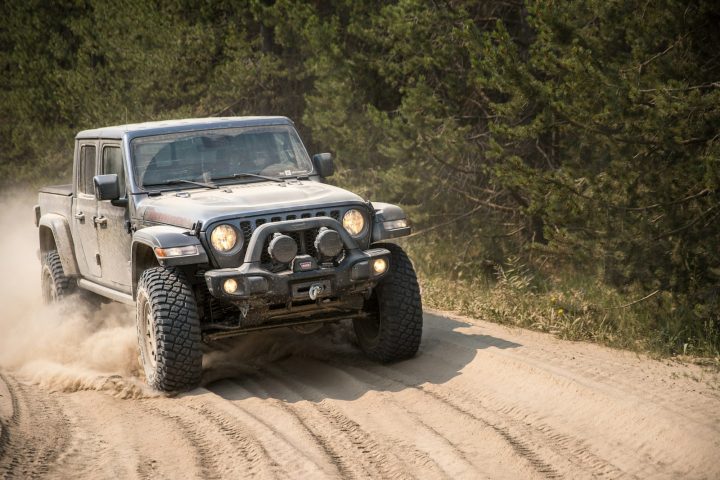
Approach, Departure and Breakover Angles Explained, With 2026 Specs
The three angles that decide whether your truck clears a ledge, a ditch or a crest, how the factory measures them, how to calculate breakover, and published figures for 2026 off-road trims.
The short version
- Published angles are measured at curb weight with standard tires; passengers and gear make every angle smaller.
- Breakover is roughly 2 x atan(2 x mid-wheelbase clearance / wheelbase); longer wheelbases need more clearance.
- Bumpers and overhangs set approach and departure; hitches, mud flaps and racks quietly cut departure.
- The Raptor 37 Package lifts the F-150 Raptor's approach from 30.7 to 33.1 degrees on the same wheelbase.
- Take ditches at an angle, put tires on the high points, and use a spotter who stays out of the truck's path.
Approach, breakover and departure angles tell you how steep an obstacle your truck can climb onto, crest and drive off before sheet metal, a bumper or the frame touches the ground. They're the three most useful numbers on an off-road spec sheet, and the most misunderstood. Here's what they mean, how the factory measures them, how to calculate breakover yourself, and how to drive so the numbers work in your favor.
Approach, breakover and departure angles defined
Picture your truck from the side, parked on flat ground.
- Approach angle is the steepest ramp the front of the truck can meet without the bumper, air dam or anything else ahead of the front tires hitting it. It's measured from the ground to a line that touches the front tire and the lowest point of the front overhang.
- Departure angle is the same thing at the back: the steepest ramp the truck can drive off (or back onto) before the rear bumper, hitch or exhaust drags.
- Breakover angle (also called ramp breakover) is the sharpest crest the truck can drive over without the belly touching the peak while the front and rear tires are on either slope. Get it wrong and you're high-centered, with the wheels spinning in the air.
Approach, breakover and departure angles
Three angles, three kinds of obstacles
Approach limits how steep a face you can drive up before the front bumper hits. Breakover limits how sharp a crest you can cross before the belly drags. Departure limits the drop or ramp you can leave before the rear bumper or hitch digs in.
Approach angle
Measured from the ground, tangent to the front tire, up to the lowest point of the front end. Bigger tires, a lift and a high-clearance bumper all raise it.
- Typical stock half-ton
- mid-20s°
- Serious off-road trims
- 30–45°
Breakover angle
The angle formed by lines tangent to the front and rear tires that meet at the lowest point between the axles. Long wheelbases lose here, which is why crew-cab long-beds high-center on crests.
- Quick estimate
- 2 × atan(2 × clearance ÷ wheelbase)
- Improves with
- Lift, taller tires, shorter wheelbase
Departure angle
Same idea as approach, at the back. Receiver hitches, low exhaust tips, mud flaps and long overhangs all cut it.
- Quick win
- Pull the hitch before the trail
- Watch for
- Rear bumper corners on ledges
Bigger is better for all three. A related spec, ground clearance, is the distance from the ground to the lowest point of the truck. Federal regulations separate "running clearance," which excludes the axles and other unsprung parts, from "axle clearance," measured to the lowest point of the differential. Spec sheets don't always say which one they're quoting. For more terms like these, see our 4x4 glossary.
How manufacturers measure the angles
Published angles are static measurements. The federal definitions in 49 CFR Part 523 draw each angle using lines tangent to the tire's "static loaded radius," measured with the vehicle at curb weight on a level surface, wheels pointed straight ahead and tires at the recommended pressure. Automaker spec sheets follow the same idea. Stellantis prints it right at the top of its 2026 Jeep Gladiator and Ram Heavy Duty specifications: all dimensions are measured at curb weight with standard tires and wheels.
Curb weight means a full tank of fuel and fluids but no passengers, cargo or accessories. Load the truck with people, a cooler, a rooftop tent and recovery gear and the suspension compresses, so every angle shrinks. Add speed and the suspension compresses further over each bump. Treat the published numbers as the best case.
The same federal rule uses these measurements to decide whether a 4x4 counts as capable of off-highway operation for fuel economy classification. A qualifying vehicle must meet at least four of these five minimums:
Every trim in the table below beats the breakover, departure and clearance minimums easily. The F-150 Tremor's 27.6-degree approach angle actually lands just under the 28-degree line, a reminder that full-size trucks with long noses give up approach angle first.
How to calculate breakover angle
You can estimate breakover from two numbers: wheelbase and the clearance at the middle of the wheelbase.
Breakover formula
Breakover ≈ 2 × atan(2 × clearance ÷ wheelbase). Use the same units for both measurements and set your calculator to degrees.
The formula treats the tire contact patches and the lowest point at mid-wheelbase as the three points of a triangle. Here's how it plays out:
- Stock crew-cab half-ton. A 145-in wheelbase with 11 in of clearance at the midpoint: 2 × 11 ÷ 145 = 0.152. The arctangent of 0.152 is 8.6 degrees, and doubled that's about 17.3 degrees.
- Same truck, 2 in taller. A lift plus bigger tires that raises the belly to 13 in gives 2 × atan(26 ÷ 145), or about 20.3 degrees. Three extra degrees is the difference between scraping over a crest and rolling over it.
- Midsize truck, same clearance. A 128.7-in wheelbase at 11 in works out to about 19.4 degrees. To match that, the 145-in truck would need roughly 12.4 in at the midpoint, about 1.4 in more.
The formula holds up well when you feed it the right clearance. The 2026 Ram 2500 Power Wagon lists 14.2 in of ground clearance on a 149.3-in wheelbase. The formula says about 21.5 degrees, and Ram publishes 22.0.
It falls apart when the clearance you use isn't the clearance at mid-wheelbase. The 2026 Tacoma TRD Pro is listed at 11.5 in of running clearance on a 131.9-in wheelbase, which works out to about 19.8 degrees, but Toyota publishes 27.4. The headline clearance number is the lowest point the maker measured, which is rarely at the middle of the wheelbase. Breakover depends on what hangs down in the middle, and the official method draws its lines tangent to the tires, which gives a little extra credit for tire size. For your own truck, measure from the ground to the lowest point between the wheels, near the middle, and use that.
What changes each angle
Bumpers and overhangs
Approach and departure angles are mostly about overhang: how far the bumper sticks out past the tire and how low it hangs. Factory off-road trims chase approach angle by trimming or raising the front bumper and removing low air dams. Chevrolet, for example, credits the Silverado ZR2's off-road cut front bumper with enabling a 33.5-degree approach angle. Aftermarket high-clearance bumpers do the same, and they often improve approach angle more than a lift does. See our guide to bumpers, sliders and skid plates.
Lift and tire size
A suspension lift raises the body, bumpers and frame, so approach, departure and breakover all improve. Taller tires help every angle too, because they raise the whole truck and push the tire's leading edge farther forward. Ford's own numbers make the point. Moving the 2026 F-150 Raptor from its standard 35-in tires to the Raptor 37 Package takes approach from 30.7 to 33.1 degrees, breakover from 22.3 to 24.4, departure from 23.5 to 24.9, and ground clearance from 11.9 to 13.1 in.
A body lift does little for the angles. The bumpers bolt to the frame, so they stay where they were unless you add relocation brackets, and the frame and its skid plates don't move at all, so breakover stays the same. The differences between lift types are covered in our leveling kit vs. lift kit vs. body lift guide.
Wheelbase
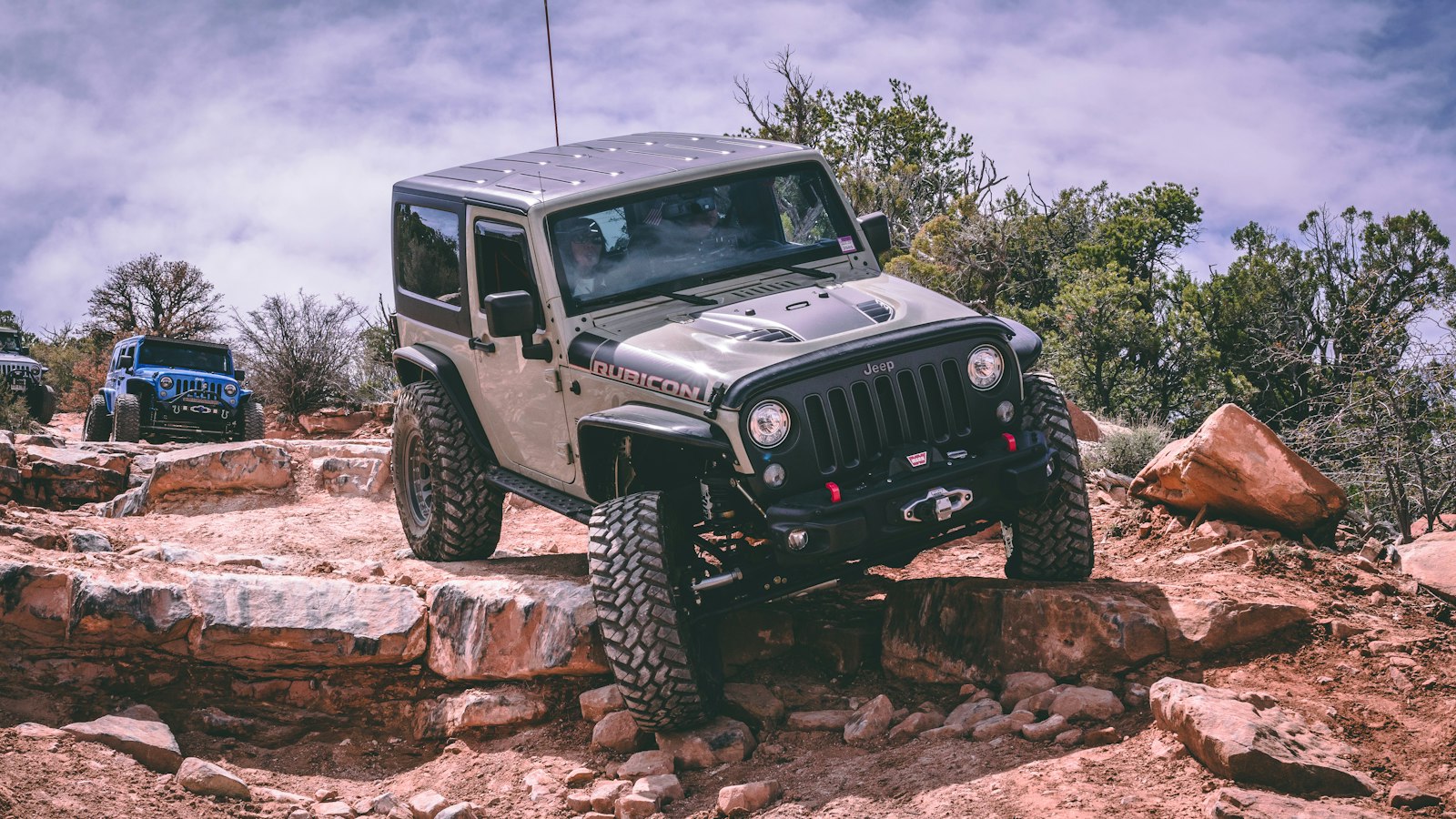
Wheelbase drives breakover. A long crew-cab, long-bed truck needs a lot more clearance to match a shorter truck over the same crest. That's why the 2026 Jeep Gladiator Rubicon, with its huge 43.4-degree approach angle, still has a modest 20.3-degree breakover on its 137.3-in wheelbase. Short overhangs don't fix a long wheelbase. If breakover matters most for how you use the truck, our midsize vs. full-size comparison is worth a read.
Hitches, mud flaps and accessories
Departure angle is the one owners wreck most often without noticing. A receiver hitch, a hitch-mounted bike rack, a spare tire under the bed, low mud flaps, a long exhaust tip or a hanging trailer wiring plug all sit behind the rear tires and lower the departure line. Toyota's 2026 Tacoma spec sheet specifies that the TRD Pro's 25.3-degree departure angle is measured without the tow hitch. If you don't tow off-road, pull the ball mount before the trail. Up front, winch bumpers, low-mounted lights and license plate brackets do the same damage to approach angle.
Published angles for 2026 off-road trims
| 2026 truck and trim | Approach | Breakover | Departure | Ground clearance | Wheelbase |
|---|---|---|---|---|---|
| Ford F-150 Raptor (standard 35-in tires) | 30.7° | 22.3° | 23.5° | 11.9 in | 145.4 in |
| Ford F-150 Raptor (Raptor 37 Package) | 33.1° | 24.4° | 24.9° | 13.1 in | 145.4 in |
| Ford F-150 Tremor (5.5-ft box) | 27.6° | 21.1° | 24.1° | 10.7 in | 145.6 in |
| Ford Ranger Raptor | 33.0° | 24.2° | 26.4° | 10.7 in | 128.7 in |
| Toyota Tacoma TRD Pro (Double Cab) | 35.7° | 27.4° | 25.3° (without hitch) | 11.5 in (running) | 131.9 in |
| Jeep Gladiator Rubicon | 43.4° | 20.3° | 26.0° | 11.1 in | 137.3 in |
| Jeep Gladiator Mojave | 44.7° | 20.9° | 25.5° | 11.6 in | 137.3 in |
| Ram 2500 Power Wagon (Crew Cab, 6-ft 4-in box) | 29.4° | 22.0° | 26.0° | 14.2 in | 149.3 in |
This table only uses figures from 2026 manufacturer spec sheets. Trucks such as the Chevrolet Colorado ZR2 and Silverado ZR2 belong in this conversation too; their published angles are on their pages in our truck database.
Don't compare across brands too closely
Automakers don't all measure ground clearance at the same point, and small differences can come down to tire size, options and where the tape went. Use the table to spot real gaps, like the Gladiator's approach angle or the Tacoma TRD Pro's breakover, not to crown a winner by 0.3 degrees.
Where the angles matter: ledges, ditches, washouts and ramps
Ledges and rock steps. Approach angle decides whether the tire meets the ledge before the bumper does. If the face of the step is steeper than your approach angle, the bumper hits first and the tire never gets a chance to climb. Departure angle decides whether the hitch catches as the rear drops off the top.
Ditches and washouts. Dropping into a ditch tests approach angle. Climbing out tests departure. A steep-sided washout tests both in the span of one truck length, and the back bumper usually loses.
Crests and humps. Breakover is the crest problem: water bars on forest roads, the top of a steep climb, a rock hump between ruts. Long-wheelbase trucks high-center on these first.
Loading ramps and driveways. Driving a 4x4 onto a trailer or into a shop with steep ramps can drag the belly at the top of the ramp or the hitch at the bottom. The same goes for steep driveways and parking garage ramps. Check the ramp angle before you commit, and use longer ramps or blocks to soften the transition.
The spec sheet tells you what the truck can clear empty and parked. The trail doesn't care about either.
Driving technique: angles, lines and spotters
Good technique buys you more clearance than most bolt-on parts. The basics are covered in our off-road driving guide, but these apply specifically to angles:
- Know your numbers, loaded. Take the published angles, subtract for your gear and passengers, and remember the truck sags further at speed. Slow down near anything steep.
- Take ditches at an angle. Crossing a ditch diagonally lets one front tire drop in at a time, which effectively reduces the slope your bumper sees. It also twists the chassis and can lift a wheel, so be ready with lockers or traction control, and don't angle across a slope so steep that the truck leans toward a rollover.
- Put your tires on the high points. Drive over rocks and humps with the tires, not the frame. Straddling a rock looks natural and is a good way to meet it with a skid plate.
- Build the ramp. Stack rocks or use traction boards to soften a ledge or a washout edge. Then put the rocks back where you found them.
- Use a spotter. A spotter can see the bumper, hitch and belly when you can't. Agree on hand signals first, have one person give directions, and make sure the spotter stays clear of the truck's path and never stands downhill of it.
- Protect what you'll hit anyway. Rock sliders and skid plates turn a misjudged breakover into a scrape instead of a crushed rocker panel or a punctured fuel tank.
If you high-center, stop spinning
Spinning the tires while high-centered digs holes and makes it worse. Stop, look, and either back off the way you came or build up under the tires. If you need a recovery, use proper recovery points and gear rated for the job.
Using the numbers when you shop or build
If you're shopping, match the angles to your terrain. Rocky trails with ledges reward approach and departure angles and short overhangs. Forest roads with water bars and crests reward breakover, which means a shorter wheelbase or more clearance at mid-wheelbase. Desert running tends to favor suspension travel over any one angle. Our list of the best 4x4 trucks for 2026 breaks trucks down by use.
If you're building, check your angles before you buy parts. Plug your wheelbase, clearance, tire size and bumper dimensions into the off-road angle calculator above, then model the change. A high-clearance bumper or removing a hitch can gain more approach or departure than a lift, and for much less money. Breakover responds only to more clearance in the middle or a shorter wheelbase, so it usually takes a lift and bigger tires.
Frequently asked questions
What is a good approach angle for off-roading?
Federal rules use 28 degrees as one of the off-highway criteria for classifying trucks, and most dedicated 2026 off-road trims beat it. Among the trucks in our table, approach angles range from 27.6 degrees for the F-150 Tremor to 44.7 degrees for the Jeep Gladiator Mojave. For rocky trails with ledges, more than 30 degrees is a useful target, and high-clearance bumpers add the most.
How do you calculate breakover angle?
Use breakover = 2 x atan(2 x clearance / wheelbase), with clearance measured at the middle of the wheelbase and both numbers in the same units. A truck with a 145-in wheelbase and 11 in of clearance at the midpoint has a breakover angle of about 17.3 degrees. Raising that clearance to 13 in improves it to about 20.3 degrees.
Does a lift kit improve approach and departure angles?
A suspension lift raises the frame and the bumpers bolted to it, so approach, departure and breakover all improve. Bigger tires help all three as well. A body lift does little for the angles because the bumpers stay on the frame and the frame doesn't move. Often, a high-clearance bumper or removing a hitch improves approach or departure more than a lift does.
Why does my truck drag when the spec sheet says it shouldn't?
Published angles are measured at curb weight with standard tires, no passengers or cargo, and the truck sitting still on level ground. Add people, gear and accessories and the suspension compresses. Hitches, bike racks, mud flaps and low bumpers also cut into the angles, and the suspension compresses even more at speed. Treat factory numbers as the best case.
Which 2026 pickup has the biggest approach angle?
Among the 2026 trucks whose specs we verified from manufacturer documents, the Jeep Gladiator Mojave leads at 44.7 degrees, followed by the Gladiator Rubicon at 43.4. The Toyota Tacoma TRD Pro is next at 35.7 degrees. The Gladiator's long 137.3-in wheelbase limits its breakover angle to about 20 to 21 degrees, though, so the best approach angle doesn't make it the best at everything.
Sources & further reading 11
- ecfr.govecfr.gov/current/title-49/subtitle-B/chapter-V/part-523
- ecfr.govecfr.gov/current/title-49/subtitle-B/chapter-V/part-523/section-523.5
- fromtheroad.ford.comfromtheroad.ford.com/content/dam/fordmediasite/us/en/library/2026/specs/2026_Ford_F150_Specs.pdf
- fromtheroad.ford.comfromtheroad.ford.com/content/dam/fordmediasite/us/en/library/2026/specs/2026_Ford_Ranger%20Technical_Specs.pdf
- toyota-cms-media.s3.amazonaws.comtoyota-cms-media.s3.amazonaws.com/wp-content/uploads/2025/11/2026_Toyota_Tacoma_Product_Information.pdf
- pressroom.toyota.compressroom.toyota.com/vehicle/2026-toyota-tacoma/
- media.stellantisnorthamerica.commedia.stellantisnorthamerica.com/view-spec.do?id=27251
- media.stellantisnorthamerica.commedia.stellantisnorthamerica.com/newsrelease.do?id=27253&mid=
- media.stellantisnorthamerica.commedia.stellantisnorthamerica.com/view-spec.do?id=27014
- media.stellantisnorthamerica.commedia.stellantisnorthamerica.com/newsrelease.do?id=27087&mid=
- chevrolet.comchevrolet.com/trucks/silverado/1500
Specs and ratings change between model years and configurations. Confirm numbers for your exact truck in the owner's manual and on the door-jamb labels.