Snow-chain shopping starts with the truck, not the chain box. Before a winter trip, confirm three things: the traction devices your truck permits, their fit on the tires actually installed, and the axle where they belong. Four-wheel drive does not answer any of those questions.
This is a researched planning guide, not a product test or a vehicle-specific installation instruction. Use it to organize your checks, then follow the current instructions for your exact vehicle and traction device.
Build a fitment record before buying
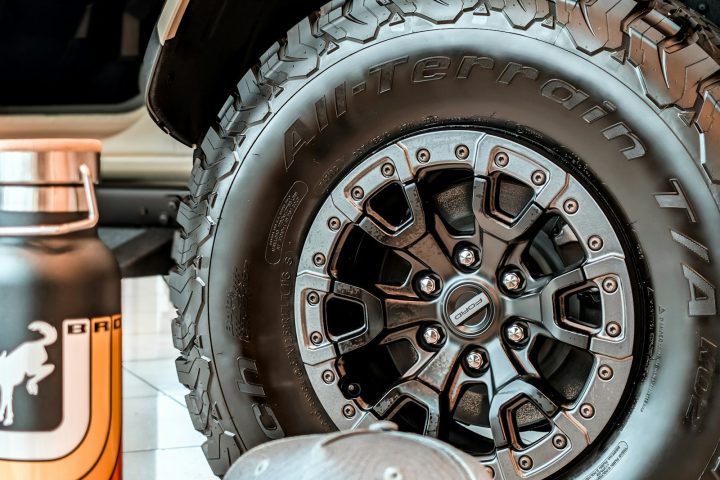
Put the truck’s model year, drivetrain, wheel package and complete tire size on one page. Photograph the sidewall rather than relying on a retailer’s vehicle selector or an old receipt. If a previous owner changed the wheels or tires, make that clear when asking for advice.
Find the snow-chain or traction-device section of your owner’s manual. Record its permitted sizes, device restrictions and axle placement. If your tire size is absent or the wording is unclear, resolve that question with the vehicle manufacturer or dealer before treating a shopping result as approval.
Keep model-specific rules model-specific
The Ford owner’s-manual example linked here calls for chains in pairs on the rear wheels, excludes self-tensioning chains and specifies eligible tire sizes. It also imposes a speed ceiling of 30 mph or the chain maker’s lower limit. These are instructions for that manual’s vehicle configuration, not permission for every Ford or every pickup.
That specificity matters when a friend recommends a set that works on a similar-looking truck. The recommendation may be sincere while the fitment is wrong. Save your own manual page with the chain instructions, and keep the model and year visible in the file name.
A tire-size match is only one check
A chain has to work with both the tire and the space around it. The same Ford guidance cautions against contact with the rim or suspension. A product listing that includes your tire size is therefore a starting point, not a complete vehicle-clearance assessment.
Peerless’s chain finder directs owners to their vehicle manual and recommends fitting chains before actual use. Treat this as a separate verification stage. Use the instructions supplied with the exact device, including its required tensioning and any specified recheck procedure. Do not improvise a way to make an incompatible set fit.
Practice somewhere the task is manageable
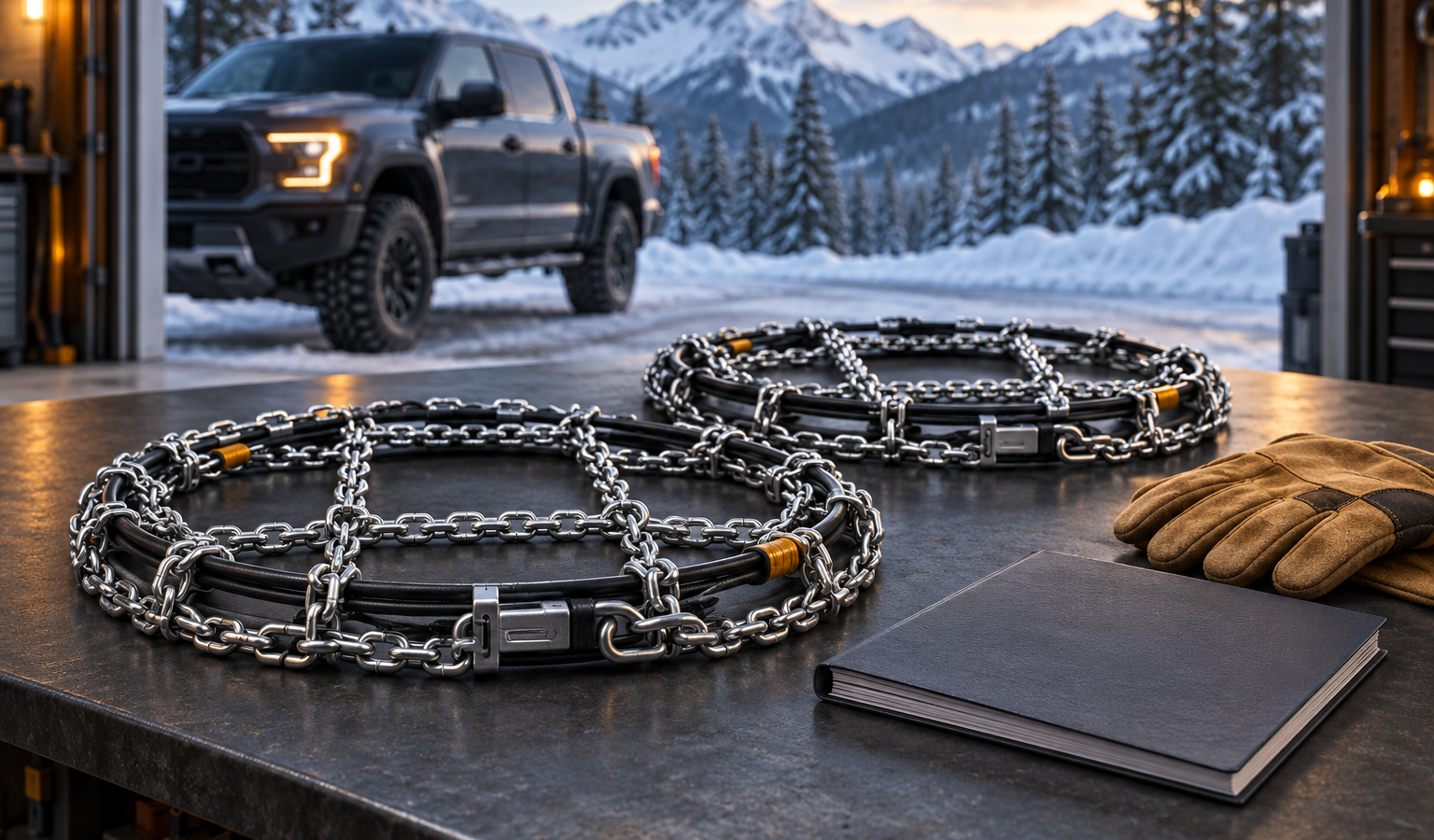
Choose a safe, level place away from traffic for the first fitting. Lay out the instructions and identify the parts before beginning. If you cannot determine the correct orientation or fastening sequence, get help from the supplier rather than postponing that uncertainty until a roadside stop.
Pack the instructions with the equipment. Gloves, a kneeling pad and a light are practical additions to consider. The goal of a practice session is not speed; it is knowing what you have, whether it fits and which questions still need an answer.
Check the route as well as the hardware
Rules depend on the jurisdiction and current conditions. Caltrans’s chain-requirements guidance, for example, says four-wheel-drive vehicles entering California chain-control areas must carry chains even when installation is not required at that moment. Its guidance also gives towing combinations additional requirements.
Do not treat an exemption heard in a weather report as universal. Check the responsible road agency before departure and follow posted controls and official directions. If the route requires a device that your truck cannot safely accommodate, change the plan rather than forcing an unsuitable installation. A winter itinerary should leave room to turn back or wait.
For a remote winter route, keep the current road-agency notices with an offline navigation plan that includes alternate exits; recheck controls before departure.
Leave with four clear answers
Your preparation is useful when you can point to the vehicle instruction, the compatible device, a successful practice fit and the current route requirements. Keep those records together instead of scattering them across shopping screenshots.
After the trip, follow the device maker’s cleaning, inspection and storage instructions. Record damage or missing parts while the details are fresh. Before the next journey, check again if tires, wheels or the travel route have changed. A familiar truck can still have a different fitment question.