TPMS Light After Wheel Work: Separate Low Pressure From a System Fault
Use pressure readings, the warning-light pattern and the correct vehicle manual to prepare a useful TPMS service conversation after wheel work.
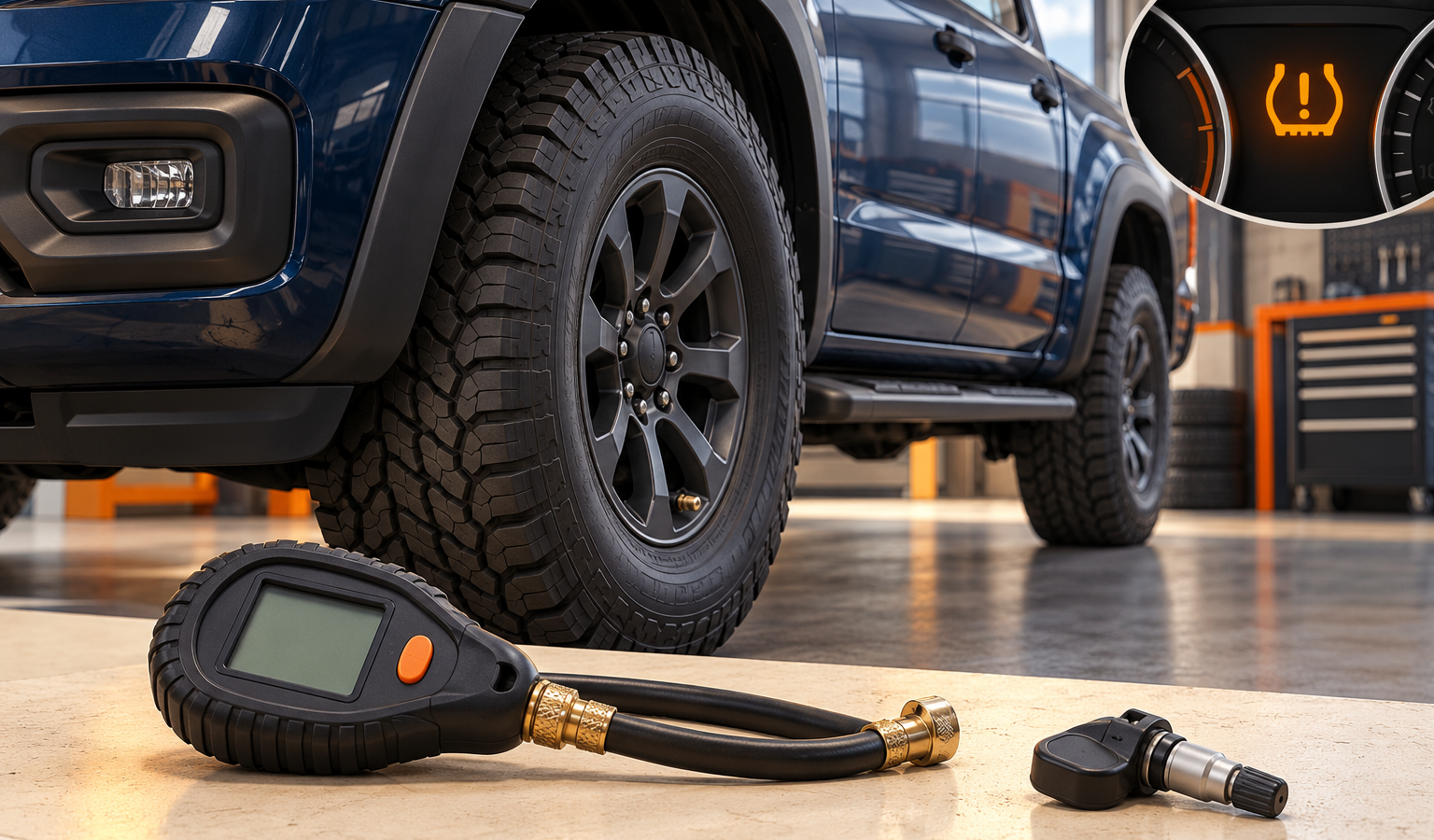
A tire-pressure warning after wheel or tire work deserves a pressure check before an explanation. It may indicate an underinflated tire, a monitoring-system problem or a condition your vehicle’s manual describes. The timing of the warning does not establish which one applies.
Start with the actual tires and the correct vehicle instructions. Do not clear a warning simply to remove it from the dashboard, and do not assume new tires were delivered at the pressure your vehicle requires. This guide helps organize the checks and service conversation; it is not a sensor-programming procedure.
Read the warning pattern
NHTSA explains that a steady tire-pressure warning can indicate significant underinflation. A light that flashes for about 60–90 seconds and then stays on indicates a TPMS malfunction. Check your vehicle’s manual for its exact displays, messages and required response.
If practical, note the pattern at startup and photograph a displayed message while safely parked. “The tire light is on” leaves out information that can help the installer identify the next step. Do not operate a phone while driving to capture it.
Check pressure independently
Use an appropriate tire-pressure gauge rather than relying solely on the dashboard display. NHTSA directs drivers to the vehicle’s recommended pressure on its placard or in the owner’s manual, not the maximum pressure printed on the tire sidewall. Its cold-pressure guidance uses tires that have not been driven for at least three hours.
A changed wheel or tire configuration may require vehicle-specific professional advice. Do not calculate a new pressure from a tire’s load rating or copy another truck’s setting. Ask the qualified installer to explain the applicable recommendation and keep that information with the installation record.
If there is visible damage, an obvious loss of pressure or uncertainty about safe travel, arrange appropriate assistance. A monitoring-system fault does not rule out a real tire problem occurring at the same time.
Match the manual to the truck
Find instructions for the exact model year and equipment. Manufacturers may describe different procedures for tire rotation, new sensors, replacement wheels or use of a temporary spare. The procedure for a neighboring model or an older truck may not apply.
For Ford owners, the official owner-manual selector is a starting point for the relevant document. Use your own manufacturer’s equivalent if you drive another brand. Look for the tire-pressure monitoring section and distinguish ordinary pressure adjustment from system diagnosis or sensor setup.
Ask what changed during the wheel work
Bring the invoice and ask the installer which wheels and sensors are now on the truck. Were original sensors retained? Were replacements supplied? Was any vehicle-specific registration or learning process required and completed? These are questions for a documented service record, not assumptions about what a package included.
Also mention whether a spare wheel is currently fitted. Record when the warning first appeared, whether it started immediately after collection and whether any message changed. A short timeline is more useful than concluding that a sensor must be defective.
Do not improvise a reset
Online reset instructions often omit the vehicle configuration they were written for. Avoid random button sequences, repeated inflation changes or driving a prescribed distance taken from an unrelated model. A system may require a supported procedure or diagnostic equipment, and a warning may have an unresolved physical cause.
If the manual specifies an owner procedure that you can safely follow, use that exact instruction. If the warning remains, return to the installer or an appropriate service provider with the measured pressures and warning pattern. Do not disable monitoring to accommodate an unresolved compatibility issue.
Keep a small handover record
- The wheel and tire descriptions on the invoice.
- Any sensor part information supplied by the installer.
- The applicable pressure recommendation and where it came from.
- The warning pattern and any dashboard message.
- The pressure readings and whether the tires were cold.
- The service provider’s findings and any completed setup procedure.
This record is also useful when wheels are changed again. Store it with the vehicle paperwork instead of relying on a remembered conversation.
A quiet dashboard is only part of the result
NHTSA emphasizes that TPMS does not replace regular gauge checks. Continue the vehicle’s normal tire-care routine after the warning is resolved. The useful outcome is correct tire condition and pressure, compatible equipment and a functioning monitoring system, rather than simply a light that has disappeared.