Overlanding Truck Build Plan: Six Phases From Stock to Self-Sufficient
Build in phases, from reliable tires to sleeping, power, water and suspension, and track every pound, because overland builds routinely blow past payload.
The short version
- Payload on the door placard is the budget for every part, person and pound you add. Weigh the loaded truck at a scale.
- Build in order: reliability and tires, recovery and comms, sleep, power, water and cooking, then suspension.
- Rooftop tents run about 108-250 lb and slide-in campers can top 1,700 lb dry, so the sleep setup often decides payload.
- A moderate sample build here adds roughly 1,560 lb, enough to put many trucks at or over GVWR.
- Stiffer springs and airbags help carry weight but never raise the GVWR or payload rating.
An overland build is a series of weight decisions disguised as shopping. Do it in phases, in the order below, and weigh the truck as you go, because the quickest way to ruin a capable 4x4 is to bolt 1,500 lb of good ideas onto a truck rated to carry less than that.
Payload Is the Budget for the Whole Build
Payload is what the truck can carry: people, cargo, accessories and a trailer's tongue weight, all counted together. It's the gross vehicle weight rating (GVWR) minus what the truck weighs as built. Your truck's real number is on the Tire and Loading Information placard on the driver's door pillar, which federal rules require to read "The combined weight of occupants and cargo should never exceed" a stated number of pounds. That figure already accounts for factory options. Everything you add afterward comes straight out of it.
Aftermarket parts add up fast. A steel front bumper adds roughly 190 lb net after the stock bumper comes off, according to one bumper maker's breakdown, and a 10,000 lb synthetic-line winch adds around 60 lb more. Because both hang ahead of the front axle, that axle carries all of the added weight and then some. That's why the axle ratings (GAWR, also on the door label) matter as much as the total. Off-road trims with heavier wheels, skid plates and suspension often carry lower payload ratings than plainer versions of the same truck, so read the sticker on your exact truck, not the brochure's best-case figure. Our GVWR and payload guide explains every rating on that label.
The only way to know where you stand is to weigh the truck loaded for a trip, with people aboard, at a public truck scale that reports front and rear axle weights separately. Do it after each phase.
Phase 1: Reliability, Tires and Maintenance
A stock truck in excellent condition will go farther than a built truck with a weeping axle seal. Start with a full baseline service: differential, transfer case and transmission fluids, coolant, brakes, belts, hoses, battery and a careful look for leaks. Our 4x4 maintenance schedule covers the driveline items people forget.
Tires are the first real upgrade. Light-truck (LT) construction resists punctures and sidewall cuts better than most P-metric tires, and the replacement's load capacity has to meet or exceed what the placard calls for. A good all-terrain suits most overland travel, since you'll spend far more time on gravel and pavement than in deep mud; our A/T vs M/T guide covers the tradeoffs. Carry a matching full-size spare, a plug kit and the compressor to use it. Bigger tires are heavier, which counts against payload and gearing, so size up modestly if at all.
Phase 2: Recovery and Communications
Before you drive anywhere remote, carry the gear to get unstuck: rated recovery points, a kinetic rope, shackles, a shovel, traction boards, gloves and a way to air down and back up. Our essential recovery kit guide covers each piece. If you add a winch, size it from GVWR, not curb weight. Warn's rule is GVWR times 1.5 for the minimum rated pull, and an overland truck spends its life near GVWR.
Communication comes next. A GMRS radio lets you talk truck to truck; the FCC license costs $35, has no exam and covers your family for 10 years. For true backcountry, add a satellite messenger or a phone with satellite SOS, and always leave a trip plan with someone at home.
Phase 3: Sleep and Storage
This is where most builds blow the payload budget, because sleeping setups are big, heavy and mounted high.
| Setup | Approx. weight | Strengths | Tradeoffs |
|---|---|---|---|
| Ground tent | Tens of pounds, not hundreds | Cheapest and lightest, nothing mounted on the truck | Slower setup, wet or rocky ground, you're at ground level |
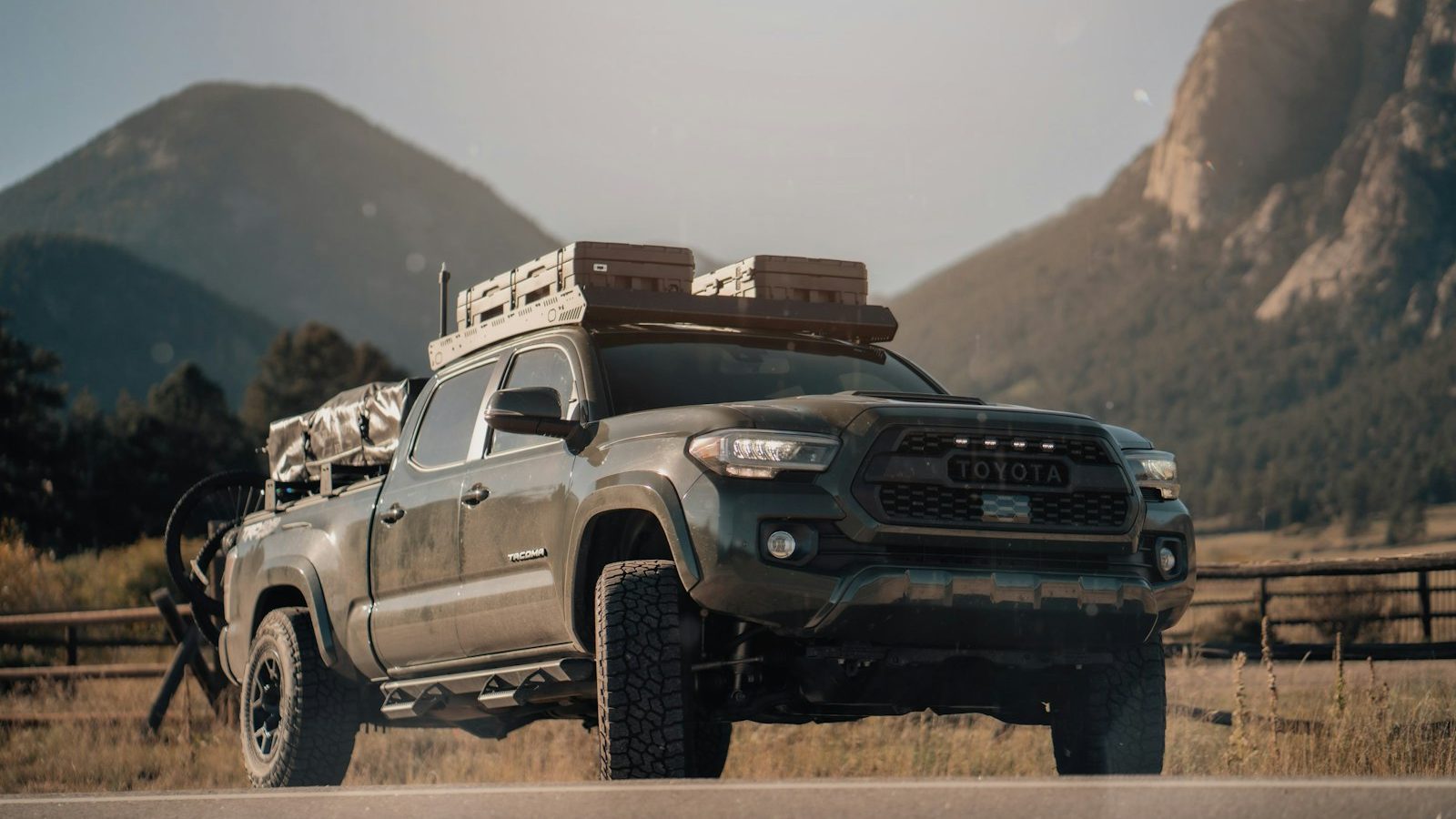
| Rooftop tent on a cab rack | 108–250 lb tent, plus rack | Fast setup, flat bed off the ground, bed stays free | Limited by the roof's dynamic load rating, raises center of gravity, must pack up to drive anywhere |
| Rooftop tent on a bed rack | Same tent, plus a bed rack | Keeps weight off the cab roof, over the rear axle, with storage underneath | Still high weight, rack rating limits, top-down bed access is awkward |
| Camper shell, sleep in the bed | About 300 lb for a standard shell; pop-up toppers about 275–390 lb | Lockable, weatherproof storage, low center of gravity | Limited headroom unless it's a pop-up; a sleeping platform eats cargo space |
| Slide-in camper | Roughly 1,700–4,000 lb dry for common full-featured models; lighter pop-up campers exist | Bed, kitchen and shelter in one box | Often needs a 3/4- or 1-ton truck, raises the center of gravity substantially, hurts trail ability |
For rooftop tents, check two ratings: the roof or rack's dynamic load rating (for driving) and its static rating (for parked with people in the tent). The tent plus the rack plus anything strapped to it has to fit under the lower one while you're moving. A shell is the payload-friendly choice and doubles as secure storage, while a slide-in camper is the most comfortable and the hardest on the truck.
Storage follows the same logic. Keep heavy items low and ahead of the rear axle, keep the roof for light, bulky gear, and tie down everything. Loose gear becomes a projectile in a crash or rollover. Drawer systems are convenient but heavy, so weigh one before you buy.
Phase 4: Power for the Fridge and Everything Else
The fridge is usually what drives the power decision. A 45-liter compressor fridge such as Dometic's CFX3 45 weighs about 41 lb empty and averages roughly 0.8 amp on DC power, according to Dometic's figures, but real draw climbs in hot weather and with frequent lid opening.
Dual battery with a DC-DC charger. A second battery in the truck, charged while you drive. Many modern trucks use smart alternators that vary their voltage and don't consider an auxiliary battery's chemistry or state of charge, which is why REDARC and others recommend a DC-DC charger that runs a proper multi-stage charge for the house battery. It's the tidiest setup for people who drive every day of a trip, but it's a permanent install that needs correct fusing and wire sizing.
Portable power station plus solar. A self-contained lithium battery with 12V and 120V outlets, recharged by solar panels, a wall outlet, or the truck's 12V socket.
Pros
- No permanent wiring, moves between vehicles and home
- Runs 120V devices without a separate inverter
- Solar keeps it topped up when you stay put for days
Cons
- Charging from a 12V socket is slow
- Solar output depends on sun, season and shade
- Takes up cabin or bed space and must be secured
Rule of thumb: if you move camp most days, a dual battery earns its keep. If you park for several days at a time, a power station with solar is simpler. Either way, mount lithium batteries away from engine heat and follow the maker's install instructions.
Phase 5: Water, Fridge and Cooking
Water is heavy and non-negotiable. At 8.34 lb per gallon, 10 gallons weighs more than 83 lb before the containers. A common planning figure is at least a gallon per person per day for drinking and basic cooking, more in hot weather or if you wash dishes. Split it between containers so one leak doesn't take the whole supply, and store it low.
Mount the fridge on a slide or tie-down kit rated for it; a loaded fridge is one of the heaviest single items in the truck. For cooking, a two-burner propane stove is simple and reliable. Store propane cylinders upright and secured, outside the cabin where possible, and check fire restrictions before you light anything.
Carbon monoxide
Never cook, run a fuel-burning heater, or leave an engine running inside a tent, rooftop tent or closed camper shell. Carbon monoxide builds up quickly in small spaces and gives little warning.
Phase 6: Suspension for the Load, Not for Looks
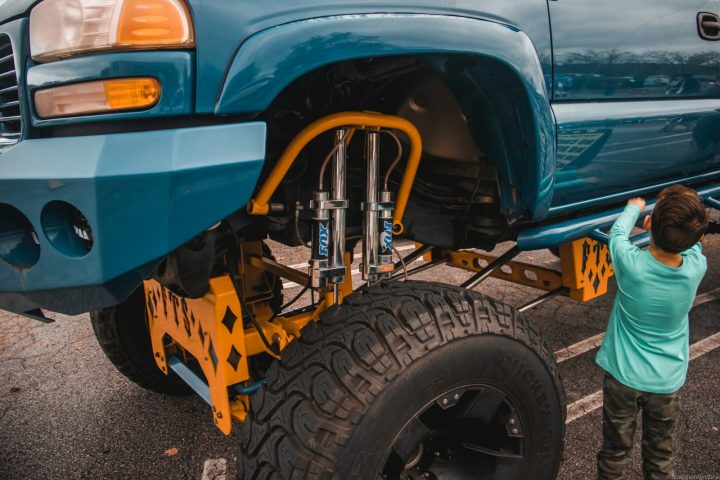
Suspension comes last because you can't choose springs until you know what the truck weighs loaded. Once you do, pick coil springs or leaf packs rated for that weight, shocks valved to control it, and consider airbags or helper springs for a load that changes a lot. The goal is a truck that sits level and controls body motion when full, not one that looks tall when empty.
Stiffer springs and airbags help the truck carry weight more comfortably, but they don't raise its GVWR or payload rating. Those ratings reflect the axles, brakes, tires, frame and wheels together, and the door placard stays the limit. Lifts bring their own tradeoffs in center of gravity, driveline angles and alignment; our leveling kit vs lift kit guide covers them.
A Sample Overland Weight Budget
Here's what a moderate, common build can add up to. Every weight is approximate, and your parts will differ, but the total is the point.
| Item | Approx. weight |
|---|---|
| Two adults | ~350 lb |
| Larger all-terrain tires and wheels, added over stock (five, including spare) | ~75 lb |
| Steel front bumper, net of the stock bumper | ~190 lb |
| 10,000 lb-class winch with synthetic line | ~60 lb |
| Rock sliders and skid plates | ~150 lb |
| Recovery kit: rope, shackles, boards, shovel, compressor | ~60 lb |
| Hardshell rooftop tent | ~165 lb |
| Bed rack | ~70 lb |
| 12V compressor fridge, 45 L class, empty | ~41 lb |
| Food and drinks | ~50 lb |
| Water, 10 gal at 8.34 lb/gal, plus containers | ~95 lb |
| Auxiliary battery, DC-DC charger and wiring | ~45 lb |
| Stove, fuel, cookware, table and chairs | ~60 lb |
| Sleeping bags, clothes and personal gear | ~60 lb |
| Tools, spare parts and fluids | ~50 lb |
| Storage bins and tie-downs | ~40 lb |
| Total | ~1,561 lb |
That's about 1,561 lb before a dog, a third passenger, a jerry can of fuel or a trailer's tongue weight. Compare it with the number on your door placard. Plenty of trucks, especially midsize crew cabs and off-road trims, would be at or over their limit with this list.
Switch the towing calculator to payload mode and plug in your truck's numbers and your own gear list to see how much margin is left.
Over GVWR is over the limit
Exceeding GVWR or an axle rating asks the brakes, tires, springs and frame to handle more than the manufacturer validated. Stopping distances grow, handling gets sloppy, and tires run hotter. If the scale says you're over, remove weight. Upgraded suspension doesn't change the rating.
Navigation, Permits and Public-Land Rules
Download maps before you lose signal. Gaia GPS and onX Offroad are the common choices for offline trail maps, and both put offline downloads behind a paid subscription. onX's higher tier adds private land boundaries, which helps you avoid trespassing. Carry a backup: a second device, a paper map, or both.
Public-land rules vary by agency and area, so check before each trip:
- National forests: the Motor Vehicle Use Map for each district shows which roads and trails are open to motor vehicles. If a route isn't on it, it isn't open. Printed copies are free at district offices.
- BLM land: dispersed camping is generally limited to 14 days in any 28-day period, after which you move a significant distance, often 25 miles or more. Limits vary by field office, and vehicles stay on designated routes.
- Permits and restrictions: some areas require permits for large groups, campfires or specific routes, and fire restrictions change with conditions.
- Wilderness areas are closed to motor vehicles, and national parks keep vehicles on designated roads.
Our off-road driving basics cover trail etiquette and Tread Lightly principles.
Starter Checklist for Your First Trip
- Door-placard payload noted, loaded truck weighed at a scale
- Baseline service done, fluids fresh, no leaks
- LT all-terrain tires, matching full-size spare, plug kit
- Deflator and compressor
- Rated recovery points, kinetic rope, shackles, shovel, traction boards, gloves
- GMRS radio (licensed) and a satellite messenger or satellite-capable phone
- Trip plan left with someone at home
- Offline maps downloaded, plus a paper backup
- Motor Vehicle Use Map or land-agency rules checked, fire restrictions confirmed
- At least a gallon of water per person per day, split between containers
- Fridge secured, power source tested overnight at home
- Stove, fuel, first-aid kit and fire extinguisher
- Everything in the cab and bed tied down
Take the first trip with just phases 1 and 2 and a ground tent. You'll learn more about what you actually need in one weekend than from a year of browsing parts catalogs, and your payload will thank you.
Frequently asked questions
How much payload do I need for an overland truck?
Add up everything: people, gear, water, fuel, accessories and any trailer tongue weight, then compare it with the payload on your door placard. A moderate build with two adults, a rooftop tent, a bumper and winch, a fridge and water can add roughly 1,500 lb or more. Leave some margin, and weigh the loaded truck at a public scale to confirm.
Will airbags or heavier springs increase my payload?
No. Airbags, helper springs and heavier coils or leaf packs can help a truck sit level and handle a load better, but they don't change the GVWR or payload on the door placard. Those ratings reflect the axles, brakes, tires, wheels and frame working together. If you're over the rating, the fix is removing weight or moving to a truck with a higher rating.
Is a rooftop tent or a camper shell better for overlanding?
It depends on how you travel. A rooftop tent sets up fast and keeps the bed free, but it weighs roughly 108 to 250 lb mounted high, so check the roof or rack's dynamic load rating. A camper shell weighs around 300 lb, keeps weight low, and gives you lockable storage, but it offers less headroom unless you choose a pop-up topper.
Do I need a dual battery system or is a portable power station enough?
A power station with solar suits people who stay parked for days and want no permanent wiring. A dual battery with a DC-DC charger suits people who drive most days, since it recharges while moving. Many newer trucks have smart alternators that don't charge a second battery properly on their own, which is why a DC-DC charger is recommended.
Do I need a permit to camp on public land?
Often not, but rules vary. Dispersed camping on BLM land is generally limited to 14 days in any 28-day period, and national forests restrict vehicles to routes on the Motor Vehicle Use Map. Some areas require permits for large groups, campfires or specific routes, and fire restrictions change with conditions. Check with the local district or field office before every trip.
Which offline map app should I use for overlanding?
Gaia GPS and onX Offroad are the two most common choices, and both require a paid subscription to download maps for offline use. onX's higher tier adds private land boundaries, which helps you avoid trespassing. Whichever you pick, download your maps before losing signal and carry a backup, such as a second device or a paper map.
Sources & further reading 14
- nhtsa.govnhtsa.gov/interpretations/gf004408
- usgs.govusgs.gov/water-science-school/science/a-million-gallons-water-how-much-it
- offroadtents.comoffroadtents.com/blogs/news/roof-top-tent-weight-limits-explained
- 4wheel-camper.com4wheel-camper.com/shell-vs-topper-vs-slide-in/
- bumperstock.combumperstock.com/blogs/resources/will-an-aftermarket-bumper-s-weight-cause-problems-for-my-truck
- northridge4x4.comnorthridge4x4.com/part/103253-warn-vr-evo10s-winch-rope
- overlandexpo.comoverlandexpo.com/compass/review-dometic-cfx3-45-fridge/
- us.support.redarcelectronics.comus.support.redarcelectronics.com/hc/en-us/articles/13866647195919-Smart-alternators-vs-fixed-alternators
- help.gaiagps.comhelp.gaiagps.com/hc/en-us/articles/360047131513-Download-Maps-for-Offline-Use
- onxmaps.comonxmaps.com/offroad/app/faq
- fs.usda.govfs.usda.gov/r04/sawtooth/maps-guides/motor-vehicle-use-maps
- blm.govblm.gov/programs/recreation/camping
- warn.comwarn.com/tech-tip-tuesday-determine-the-right-winch-capacity-for-your-truck-or-suv
- gmrs.iogmrs.io/guide/getting-licensed
Specs and ratings change between model years and configurations. Confirm numbers for your exact truck in the owner's manual and on the door-jamb labels.